




Health Benefits of Yogurt: 10 Powerful Reasons to Add It to Your Diet
Meta Description:
Discover the Health Benefits of Yogurt, including protein, calcium, probiotics, digestive support, and 10 powerful reasons to make yogurt part of a healthy diet.
Table of Contents
- What Makes Yogurt a Healthy Food?
- Health Benefits of Yogurt
- Yogurt Nutrition and Protein
- Probiotics and Gut Health
- Greek Yogurt vs Regular Yogurt
- How to Choose Healthy Yogurt
- Best Ways to Eat Yogurt
- Frequently Asked Questions
- Final Thoughts
Introduction
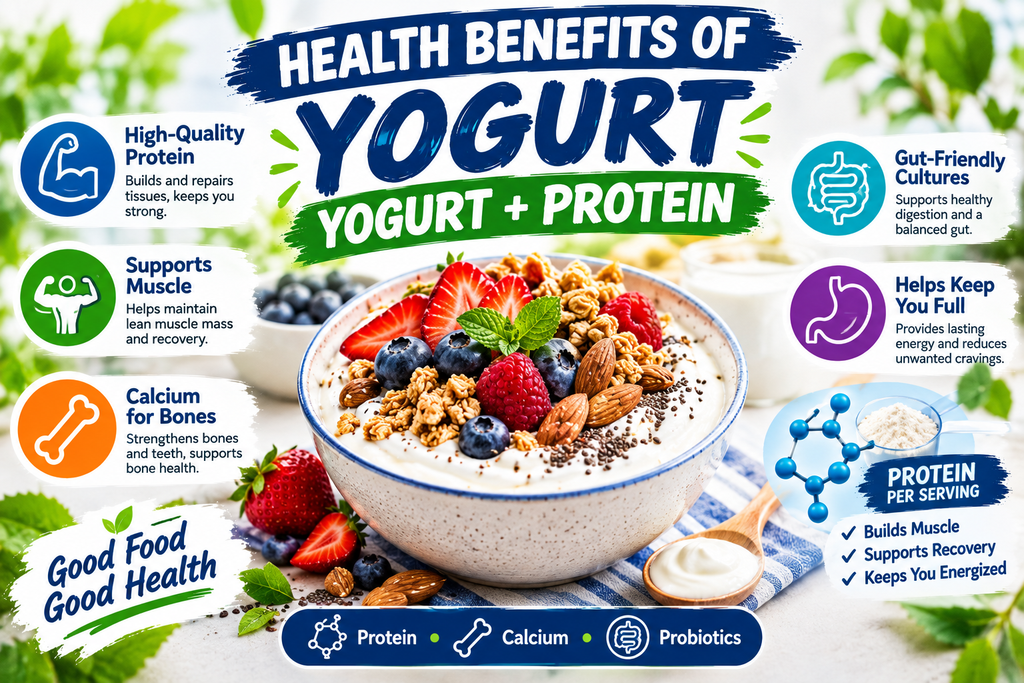
Health Benefits of Yogurt make this fermented food a popular choice for people looking for a nutritious and convenient addition to their daily diet. Yogurt can provide protein, calcium, phosphorus, vitamin B12, and other nutrients, while yogurt containing appropriate live microorganisms may also provide probiotic benefits.
From breakfast bowls to smoothies and savory meals, yogurt is easy to include in many different diets. However, nutritional content varies significantly between products, especially when it comes to added sugar, protein, fat, and live cultures.
Let’s explore the major Health Benefits of Yogurt, its nutrition, protein content, probiotics, and practical ways to choose a healthier option.
Health Benefits of Yogurt: 10 Powerful Reasons to Add It to Your Diet
Health Benefits of Yogurt: 10 Powerful Reasons to Add It to Your Diet
What Makes Yogurt a Healthy Food?
Yogurt is produced by fermenting milk with bacterial cultures. The fermentation process gives yogurt its characteristic tangy flavor and creamy texture.
Many yogurts provide important nutrients such as:
- Protein
- Calcium
- Phosphorus
- Vitamin B12
- Riboflavin
- Potassium
- Fat, depending on the variety
- Live microorganisms in products containing suitable live cultures
Harvard Health notes that yogurt can be a good source of protein and calcium and may contain live cultures.
The exact nutritional profile depends on the type of yogurt, serving size, milk used, and added ingredients.
Health Benefits of Yogurt: 10 Powerful Benefits
1. Yogurt Provides High-Quality Protein
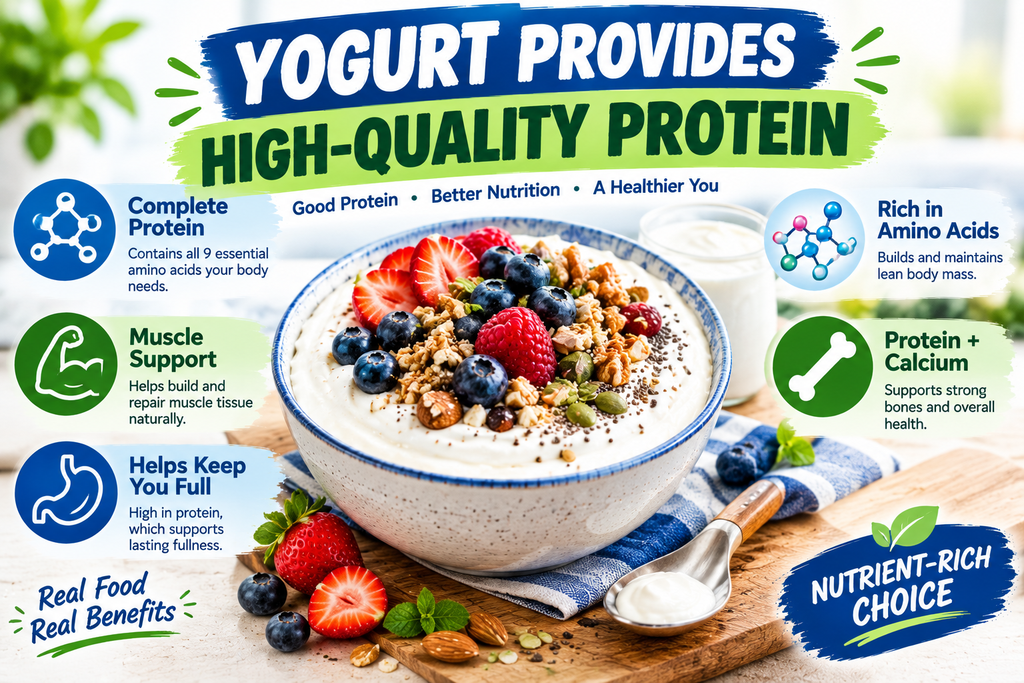
One of the most useful Health Benefits of Yogurt is its protein content.
Protein helps the body maintain and repair tissues and contributes to feelings of fullness after eating. Greek yogurt is particularly popular among people looking for a protein-rich food because straining removes some of the liquid whey and concentrates nutrients.
According to Harvard Health, a typical serving of Greek yogurt can provide roughly twice as much protein as regular yogurt, although exact amounts vary by product.
For an easy high-protein snack, try plain Greek yogurt with berries, nuts, or seeds.
2. Yogurt Supports Bone Health
Yogurt can be an excellent source of calcium, an essential mineral for maintaining strong bones and teeth.
It can also provide phosphorus and, depending on the product, vitamin D. These nutrients work together with an overall balanced diet to support normal bone health.
Regular yogurt may contain more calcium than some strained varieties because some calcium is lost with the whey during straining.
3. Yogurt Can Provide Probiotics
Probiotics are live microorganisms that can provide health benefits when consumed in adequate amounts.
Some yogurts contain live cultures, but it’s important to understand that not every yogurt automatically provides proven probiotic benefits. The effects can depend on the specific microorganisms and strains present.
The NIH explains that yogurt is one food that can contain live microorganisms, while the health effects depend on the particular microorganisms and amounts provided.
If probiotics are important to you, check the product label for information about live cultures.
4. Yogurt May Support Digestive Health
The microorganisms found in some yogurts may interact with the gut microbiome.
Different probiotic strains can have different effects, so it is not accurate to assume that every yogurt or probiotic product will produce the same result.
Some people also find yogurt easier to tolerate than milk because fermentation reduces some of the lactose. Greek yogurt generally contains less lactose than regular yogurt because of the straining process.
People with significant lactose intolerance or milk allergies should choose products according to their
individual tolerance and medical advice.
5. Yogurt Can Help Increase Nutrient Intake
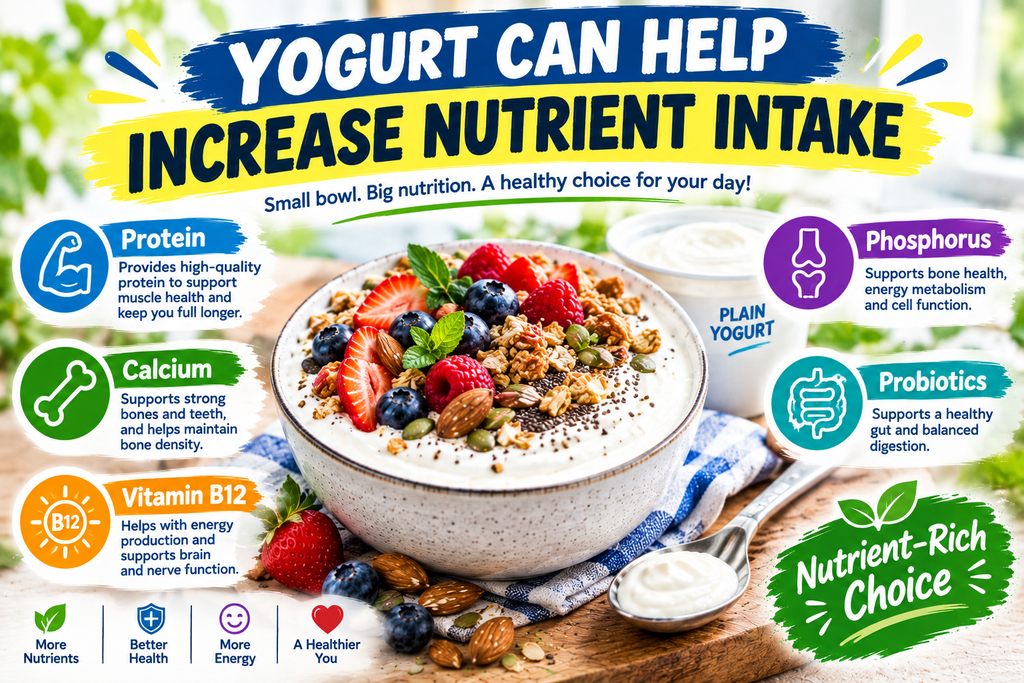
Yogurt is an easy way to add several nutrients to a meal or snack.
Instead of choosing a highly processed dessert, plain yogurt can be combined with nutrient-rich foods such as:
- Fresh berries
- Banana
- Apples
- Chia seeds
- Flaxseeds
- Almonds
- Walnuts
- Oats
This creates a balanced snack containing protein, carbohydrates, healthy fats, and other nutrients.
6. Greek Yogurt Can Be a Filling Snack
Because Greek yogurt is generally high in protein, it can be a convenient and filling snack.
Protein can contribute to satiety, which may make it easier for some people to manage hunger between meals. However, yogurt itself is not a magic weight-loss food.
For a healthier option, choose plain Greek yogurt and add fresh fruit rather than relying on heavily sweetened toppings.
Health Benefits of Yogurt: 10 Powerful Reasons to Add It to Your Diet
7. Yogurt Is Versatile in Healthy Meals
Another advantage of yogurt is its versatility.
You can use it as:
- A breakfast food
- A smoothie ingredient
- A salad dressing base
- A dip
- A substitute for sour cream
- A topping for fruit
- An ingredient in sauces
- A post-workout snack
Its mild flavor makes it easy to combine with both sweet and savory foods.
8. Yogurt May Be a Convenient Source of Calcium and Protein
Busy lifestyles can make it difficult to prepare nutritious meals. Yogurt requires little or no preparation, making it a convenient option.
A simple bowl of plain yogurt with fruit and nuts can provide protein, calcium, and other nutrients in a few minutes.
However, always check the nutrition label because products vary considerably.

9. Yogurt Can Fit Different Eating Patterns
There are many varieties available, including:
- Regular yogurt
- Greek yogurt
- Low-fat yogurt
- Whole-milk yogurt
- High-protein yogurt
- Lactose-free yogurt
- Plant-based yogurt alternatives
People following a dairy-free diet can choose plant-based alternatives, but their nutritional profiles can differ substantially from dairy yogurt.
Check the label for protein, calcium, vitamin D, added sugar, and other nutrients.
10. Yogurt Can Be a Better Choice When Added Sugar Is Limited
Not all yogurt products are equally healthy.
Some flavored yogurts can contain substantial amounts of added sugar. Choosing plain yogurt and adding your own fruit can give you more control over sweetness.
Harvard Health recommends paying attention to added sugars and comparing nutrition labels when selecting yogurt.
Yogurt Nutrition and Protein
The nutritional value of yogurt depends on the brand and variety.
Greek Yogurt
Greek yogurt is strained, giving it a thicker texture and generally increasing its protein concentration compared with regular yogurt.
It can be particularly useful for people who want a convenient protein-rich food.
Regular Yogurt
Regular yogurt is typically less concentrated than Greek yogurt but can provide more calcium in some cases.
Both regular and Greek yogurt can contain live cultures.
Plain Yogurt
Plain yogurt is often the simplest choice when you want to minimize added sugar. You can add fruit, cinnamon, nuts, seeds, or a small amount of honey according to your dietary needs.
Health Benefits of Yogurt and Probiotics
The relationship between yogurt, probiotics, and health is an active area of research.
The NIH explains that probiotic effects can vary depending on the microorganism or strain. Therefore, a yogurt containing one type of live culture should not automatically be assumed to have the same effect as another product.
Probiotics may influence the microorganisms living in the digestive tract and interact with the body’s immune and digestive systems.
However, probiotics should not be viewed as a replacement for medical treatment.
People with serious underlying health conditions or weakened immune systems should discuss probiotic products with a healthcare professional.
Greek Yogurt vs Regular Yogurt
| Feature | Greek Yogurt | Regular Yogurt |
|---|---|---|
| Texture | Thick and creamy | Generally thinner |
| Protein | Usually higher | Usually lower |
| Calcium | Can be somewhat lower | Often higher |
| Lactose | Generally lower | Generally higher |
| Live cultures | May contain them | May contain them |
| Best use | High-protein snacks | Breakfast, smoothies, meals |
The exact nutritional values vary by brand and serving size, so always read the nutrition label.
How to Choose Healthy Yogurt
When shopping for yogurt, consider these simple tips:
1. Check Added Sugar
Choose plain or low-added-sugar varieties more often.
2. Look at Protein
If protein is your priority, Greek yogurt or another high-protein variety may be useful.
3. Check Calcium
Compare labels if you are specifically looking for a calcium-rich food.
4. Look for Live Cultures
If you want yogurt containing live microorganisms, check the package labeling.
5. Consider Saturated Fat
Whole-milk yogurt can contain more saturated fat than low-fat varieties. Your overall dietary pattern matters, so choose according to your nutritional needs.
6. Compare Serving Sizes
One container may contain more than one serving. Always compare the nutrition information using the same serving size.
Best Ways to Eat Yogurt
Here are some simple yogurt combinations:
Breakfast:
Plain Greek yogurt + berries + oats + chia seeds.
Healthy snack:
Plain yogurt + banana + walnuts.
Smoothie:
Yogurt + berries + banana + milk or a suitable alternative.
Savory dip:
Plain yogurt + cucumber + herbs + spices.
Dessert-style bowl:
Plain yogurt + strawberries + a small amount of honey + chopped nuts.
These combinations can make yogurt more nutritious and enjoyable without relying heavily on added sugar.
Frequently Asked Questions
Is yogurt good for you every day?
For many people, yogurt can be part of a balanced daily diet. The best choice depends on your overall dietary pattern, nutritional needs, and tolerance.
Is Greek yogurt healthier than regular yogurt?
Neither is universally better. Greek yogurt is generally higher in protein, while regular yogurt can provide more calcium in some cases. Compare nutrition labels based on your goals.
Does all yogurt contain probiotics?
No. Yogurt can contain live cultures, but not every product provides microorganisms with demonstrated probiotic benefits. Check the label and product information.
Can yogurt help digestion?
Some yogurts contain live microorganisms that may support aspects of digestive health. However, effects differ between probiotic strains and individuals.
Is yogurt high in protein?
Some yogurt varieties are good sources of protein, especially Greek yogurt. The exact amount depends on the product and serving size.
Is plain yogurt better than flavored yogurt?
Plain yogurt is often a good choice if you want to reduce added sugar. You can add fresh fruit for natural sweetness.
Can lactose-intolerant people eat yogurt?
Some people with lactose intolerance tolerate yogurt better than milk, partly because fermentation reduces lactose and live cultures can help digest it. However, tolerance varies between individuals.
Final Thoughts
The Health Benefits of Yogurt come from its combination of important nutrients, including protein and calcium, as well as live microorganisms in suitable products.
Greek yogurt can be especially useful when you want more protein, while regular yogurt can be a convenient source of calcium and other nutrients.
For an everyday option, look for yogurt with a good protein content, appropriate calcium, and little or no added sugar. If you are specifically interested in probiotics, check the label for information about live cultures and remember that probiotic effects are strain-specific.
Yogurt can be a simple, affordable, and versatile part of a balanced eating pattern—but no single food provides every nutrient your body needs.
Medical note: This article is for general educational purposes and is not a substitute for personalized medical advice. People with milk allergies, significant lactose intolerance, weakened immune systems, or other medical conditions should consult a qualified healthcare professional about their dietary choices.
- NIH — Probiotics Fact Sheet for Consumers
- NCCIH — Probiotics: Usefulness and Safety
- Harvard Health — Greek Yogurt: Health Benefits, Protein Content, and How to Choose
- Harvard Health — Yogurt and Nutrition



[…] For another nutritious food that may fit into a balanced diet, read our article on Health Benefits of Yogurt. […]