
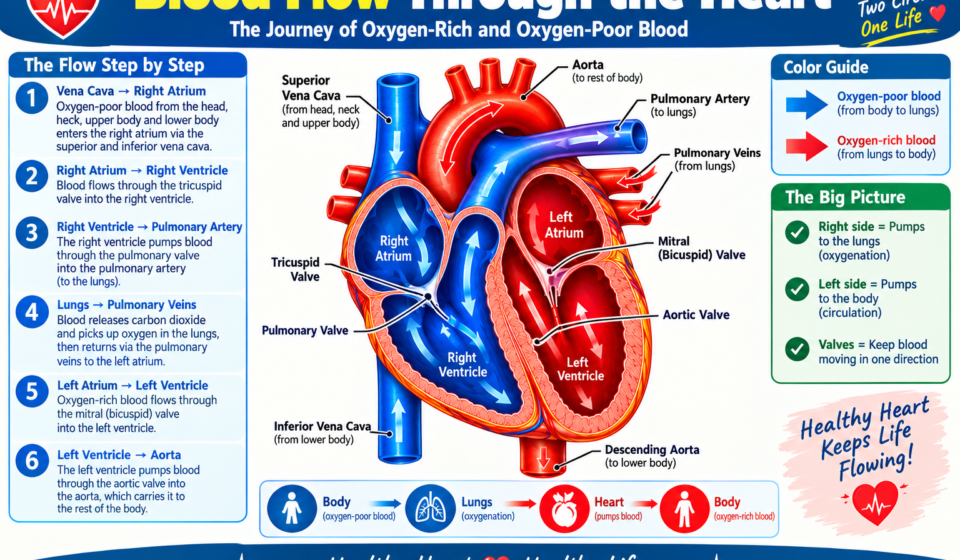


Blood Flow Through the Heart: Complete Guide to the Circulatory System
Introduction: What Is Blood Flow Through the Heart?
Blood flow through the heart is the process by which blood travels through the four chambers of the heart, passes through the lungs to receive oxygen, and circulates throughout the body to deliver oxygen and essential nutrients. The heart is one of the most important organs in the human body because it continuously pumps blood to support life.
The human heart is a muscular organ located in the chest, slightly to the left of the center. It is approximately the size of a closed fist and works as a powerful pump. Every day, the heart beats around 100,000 times in a typical adult and circulates thousands of liters of blood throughout the body.
Understanding how blood flows through the heart helps explain how the circulatory system works, why oxygen is necessary for survival, and how heart diseases can affect overall health.
The heart has four chambers, four major valves, and several important blood vessels. Each structure plays a specific role in ensuring that blood moves in the correct direction.
In this article, we will explain the complete pathway of blood flow through the heart, the functions of its chambers and valves, pulmonary and systemic circulation, and ways to maintain a healthy cardiovascular system.
1. Understanding the Structure of the Human Heart
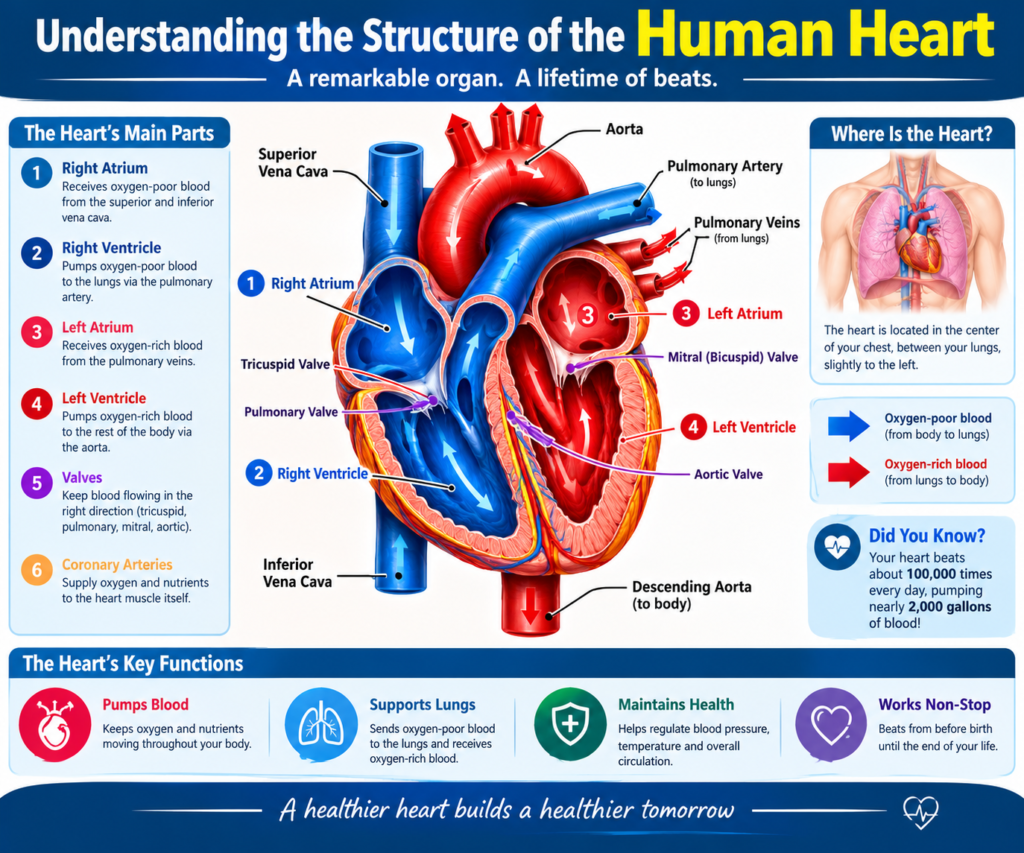
Before learning about blood circulation, it is important to understand the basic structure of the heart.
The heart contains four chambers:
Right Atrium
The right atrium is the upper-right chamber of the heart. It receives oxygen-poor blood returning from the body through two major veins:
- Superior vena cava
- Inferior vena cava
The superior vena cava carries blood from the upper part of the body, including the head, neck, arms, and chest.
The inferior vena cava carries blood from the lower part of the body, including the abdomen, pelvis, and legs.Hemophilia health information 2026
The right atrium collects this oxygen-poor blood and sends it into the right ventricle through the tricuspid valve.
Right Ventricle
The right ventricle is the lower-right chamber of the heart. Its main function is to pump oxygen-poor blood to the lungs.
When the right ventricle contracts, blood passes through the pulmonary valve and enters the pulmonary artery. The pulmonary arteries carry this blood toward the lungs, where it releases carbon dioxide and receives oxygen.
The right ventricle has a muscular wall that allows it to pump blood through the pulmonary circulation.
Left Atrium
The left atrium is the upper-left chamber of the heart. It receives oxygen-rich blood from the lungs through four pulmonary veins in the typical arrangement.
After blood receives oxygen in the lungs, it returns to the heart through these veins.
The left atrium then pushes the oxygen-rich blood through the mitral valve into the left ventricle.
Left Ventricle
The left ventricle is the lower-left chamber of the heart and has the thickest muscular wall of all four chambers.
Its main function is to pump oxygen-rich blood throughout the body.
When the left ventricle contracts, blood passes through the aortic valve and enters the aorta, the body’s largest artery.
The aorta distributes blood through a network of arteries, arterioles, and capillaries to supply oxygen and nutrients to tissues and organs.
The left ventricle needs a thick muscular wall because it must generate enough pressure to circulate blood throughout the entire body.
2. The Complete Pathway of Blood Flow Through the Heart
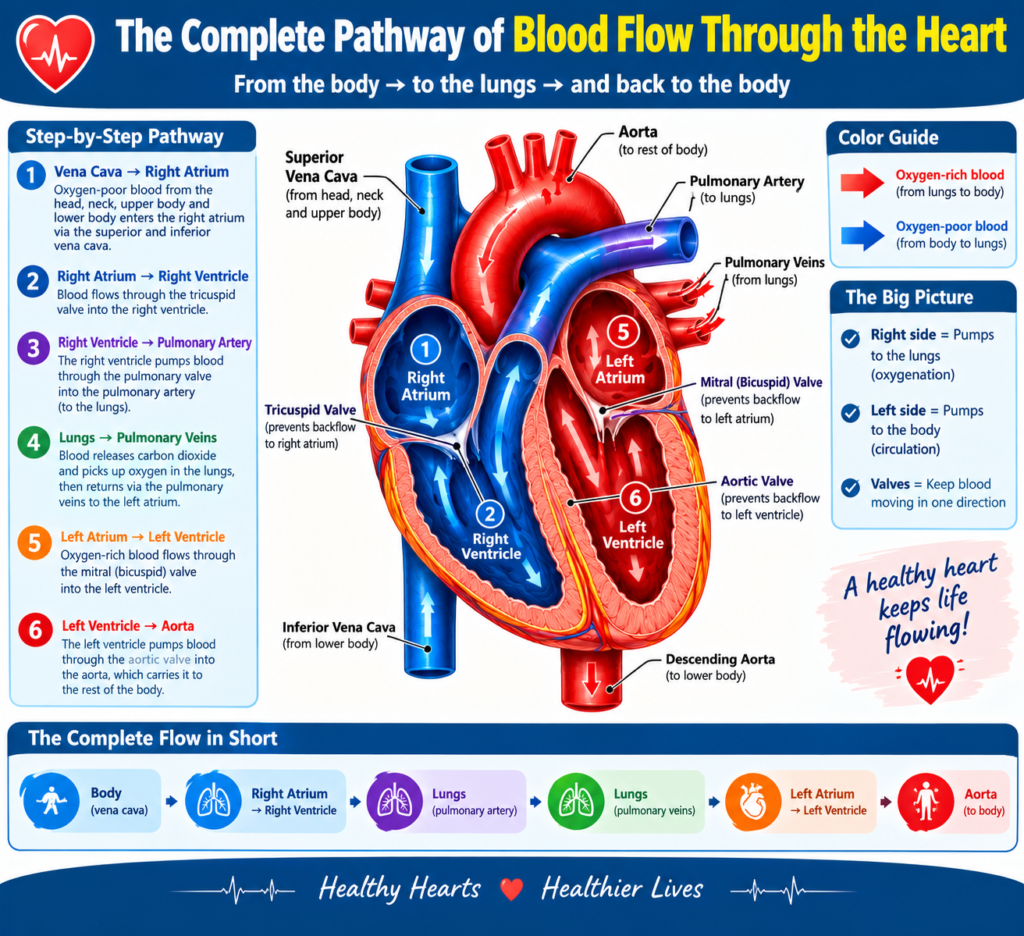
Blood follows a specific pathway through the heart, lungs, and body.
The complete sequence is:
- Body tissues
- Superior and inferior vena cava
- Right atrium
- Tricuspid valve
- Right ventricle
- Pulmonary valve
- Pulmonary arteries
- Lungs
- Pulmonary veins
- Left atrium
- Mitral valve
- Left ventricle
- Aortic valve
- Aorta
- Arteries and capillaries throughout the body
After delivering oxygen to the tissues, blood returns through the veins to the right side of the heart, and the cycle repeats continuously.Fort Hood Shooter
This circulation ensures that body cells receive the oxygen they need to produce energy and perform their normal functions.
3. Step-by-Step Explanation of Blood Flow Through the Heart
Step 1: Blood Returns from the Body
After oxygen has been delivered to body tissues, the blood contains less oxygen and more carbon dioxide.
This oxygen-poor blood returns to the heart through the veins.
The superior vena cava brings blood from the upper body, while the inferior vena cava brings blood from the lower body.
Both veins empty into the right atrium.
This is the beginning of the pathway through the heart.
Step 2: Blood Enters the Right Atrium
The right atrium receives blood returning from the body.
As the right atrium fills, its muscular walls contract and help move blood through the tricuspid valve into the right ventricle.
The tricuspid valve is located between the right atrium and right ventricle.
It helps maintain one-way blood flow and prevents significant backward movement into the right atrium when the right ventricle contracts.
Step 3: Blood Moves into the Right Ventricle
Once blood passes through the tricuspid valve, it enters the right ventricle.
The right ventricle fills with oxygen-poor blood and prepares to pump it toward the lungs.
When the right ventricle contracts, pressure rises inside the chamber. This pressure opens the pulmonary valve and pushes blood into the pulmonary artery.
The pulmonary valve closes after blood moves forward, helping prevent blood from flowing backward into the right ventricle.
Step 4: Blood Travels to the Lungs
The pulmonary arteries carry oxygen-poor blood from the right ventricle to the lungs.
This is an important feature of the circulatory system because pulmonary arteries carry blood with relatively low oxygen content.4 Pack Women’s Long Sleeve Workout Tops
In the lungs, blood passes through tiny capillaries surrounding the alveoli, which are small air sacs responsible for gas exchange.
During gas exchange:
- Carbon dioxide moves from the blood into the alveoli.
- Oxygen moves from the alveoli into the blood.
- Hemoglobin in red blood cells binds to oxygen.
The blood becomes oxygen-rich and is ready to return to the heart.
Step 5: Oxygen-Rich Blood Returns to the Left Atrium
After receiving oxygen in the lungs, blood travels back to the heart through the pulmonary veins.
In the typical arrangement, four pulmonary veins connect the lungs to the left atrium.
Unlike most veins, which carry oxygen-poor blood, pulmonary veins carry oxygen-rich blood.
The left atrium receives this blood and helps move it through the mitral valve into the left ventricle.
Step 6: Blood Passes Through the Mitral Valve
The mitral valve, also called the bicuspid valve, lies between the left atrium and left ventricle.
It allows blood to move from the left atrium into the left ventricle.
When the left ventricle contracts, the mitral valve closes. This prevents blood from flowing backward into the left atrium.
A properly functioning mitral valve is essential for efficient pumping and normal blood circulation.
Step 7: The Left Ventricle Pumps Blood into the Aorta
The left ventricle receives oxygen-rich blood from the left atrium.
When the left ventricle contracts, it generates the pressure required to push blood through the aortic valve and into the aorta.
The aortic valve prevents blood from flowing backward from the aorta into the left ventricle after contraction.How Blood Flows Through the Heart & Body
The aorta branches into smaller arteries that supply blood to the brain, heart muscle, kidneys, digestive organs, muscles, skin, and other tissues.
This stage is called systemic circulation.
Step 8: Blood Delivers Oxygen Throughout the Body
Once blood leaves the aorta, it travels through progressively smaller blood vessels.
Arteries carry blood away from the heart. Arterioles regulate blood distribution, and capillaries allow oxygen, nutrients, and waste products to move between blood and tissues.
Body cells use oxygen to produce energy.
Carbon dioxide and other waste products enter the blood and are transported toward organs responsible for their removal.
The blood then travels through venules and veins, eventually returning to the superior and inferior vena cava.
The cycle begins again.
4. The Four Heart Valves and Their Functions
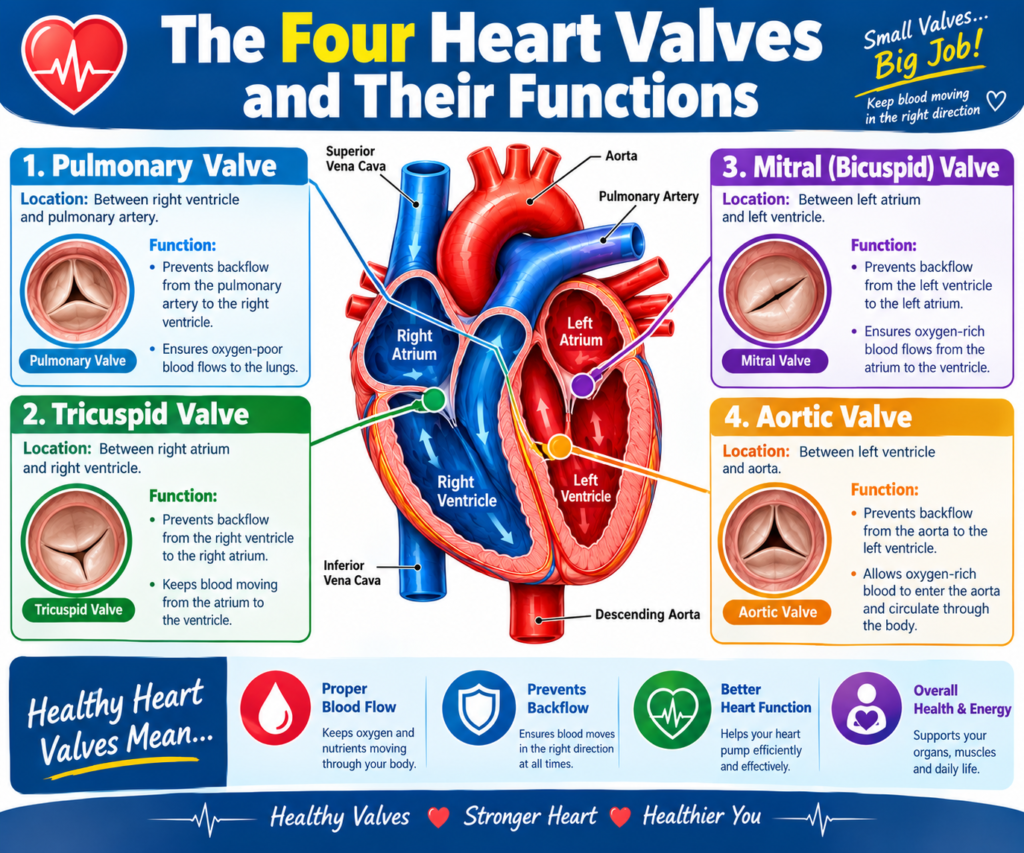
Heart valves keep blood moving in the correct direction.
There are four main valves.
Tricuspid Valve
The tricuspid valve is located between the right atrium and right ventricle.
It allows blood to enter the right ventricle and prevents backward flow into the right atrium during ventricular contraction.
Pulmonary Valve
The pulmonary valve is located between the right ventricle and pulmonary artery.
It opens when the right ventricle contracts and closes to prevent blood from returning to the ventricle.
Mitral Valve
The mitral valve is located between the left atrium and left ventricle.
It allows oxygen-rich blood to enter the left ventricle and prevents backward flow into the left atrium during contraction.
How the Heart Works – How Blood Flows through the Heart
Aortic Valve
The aortic valve is located between the left ventricle and aorta.
It opens when the left ventricle pumps blood into the aorta and closes to prevent blood from flowing backward.
If a valve becomes narrowed or does not close properly, blood circulation may become less efficient.
5. Pulmonary Circulation Explained
Pulmonary circulation is the movement of blood between the heart and lungs.
Its primary purpose is to exchange gases and replenish the oxygen supply in the blood.
The pathway is:
Right ventricle → Pulmonary valve → Pulmonary arteries → Lung capillaries → Pulmonary veins → Left atrium.
During this process, blood releases carbon dioxide and absorbs oxygen.
Pulmonary circulation operates at lower pressure than systemic circulation because the lungs have delicate blood vessels that must support efficient gas exchange without excessive pressure.
Problems affecting pulmonary circulation can make it difficult for the body to obtain adequate oxygen or for the right side of the heart to pump blood effectively.
6. Systemic Circulation Explained
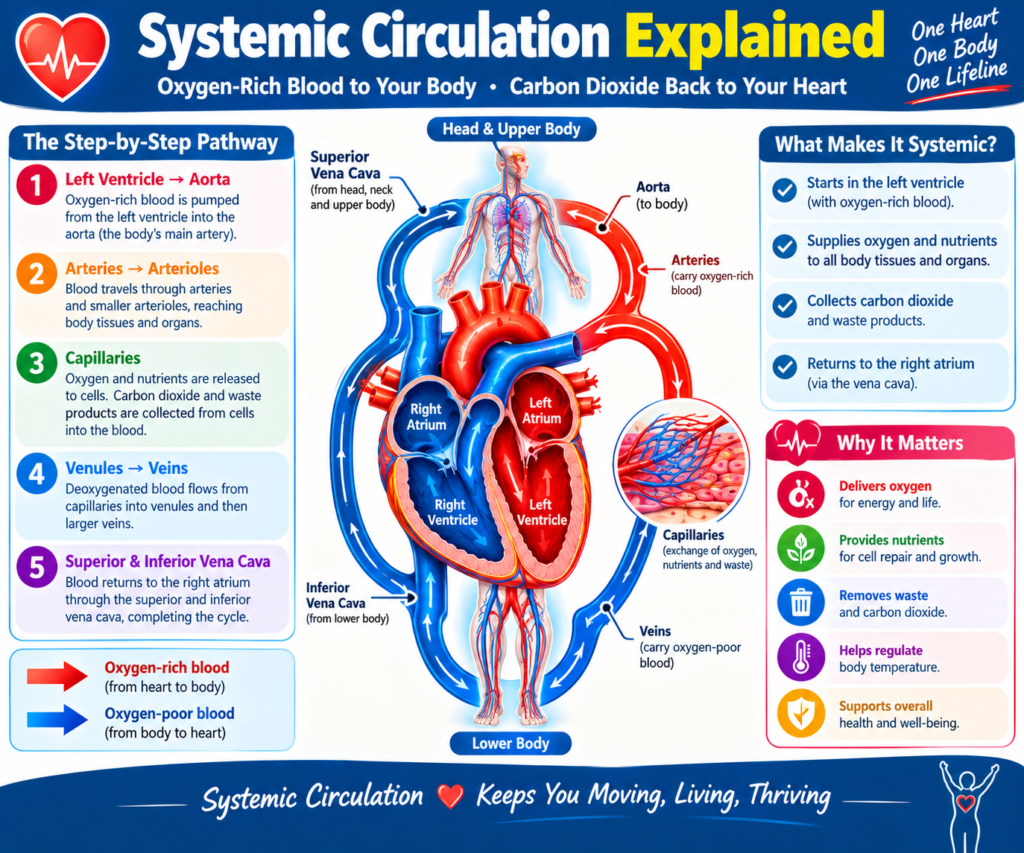
Systemic circulation carries oxygen-rich blood from the left side of the heart to the body’s tissues and returns oxygen-poor blood to the right side.
The pathway is:
Left ventricle → Aortic valve → Aorta → Arteries → Arterioles → Capillaries → Venules → Veins → Superior and inferior vena cava → Right atrium.
Systemic circulation supplies oxygen and nutrients to nearly every organ.
It also helps transport hormones, regulate body temperature, and carry waste products toward organs that process or remove them.
The pressure generated by the left ventricle helps maintain blood flow throughout the body.
Together, pulmonary and systemic circulation form a continuous cardiovascular system.
7. How the Heartbeat Controls Blood Flow
Blood moves through the heart because the heart muscle contracts and relaxes in a coordinated rhythm.
One complete heartbeat includes two main phases.
Diastole
Diastole is the relaxation phase of the heart cycle.
During this phase, the ventricles relax and fill with blood. Blood moves from the atria into the ventricles as the appropriate valves remain open.
The amount of blood in a ventricle at the end of filling is called the end-diastolic volume.
Adequate filling is important because it helps the ventricles pump an appropriate amount of blood during the next contraction.
Systole
Systole is the contraction phase.
During ventricular systole, the ventricles contract and push blood into the pulmonary artery and aorta.
The tricuspid and mitral valves close to prevent backward flow into the atria, while the pulmonary and aortic valves open as ventricular pressure rises above the pressure in the outgoing arteries.
The heart’s electrical conduction system coordinates these contractions.
Electrical signals normally begin in the sinoatrial node, travel through the atria, pass through the atrioventricular node, and continue through specialized conducting pathways to activate the ventricles.
This coordinated activity allows the heart to pump blood efficiently.
8. The Role of Blood Vessels in Circulation
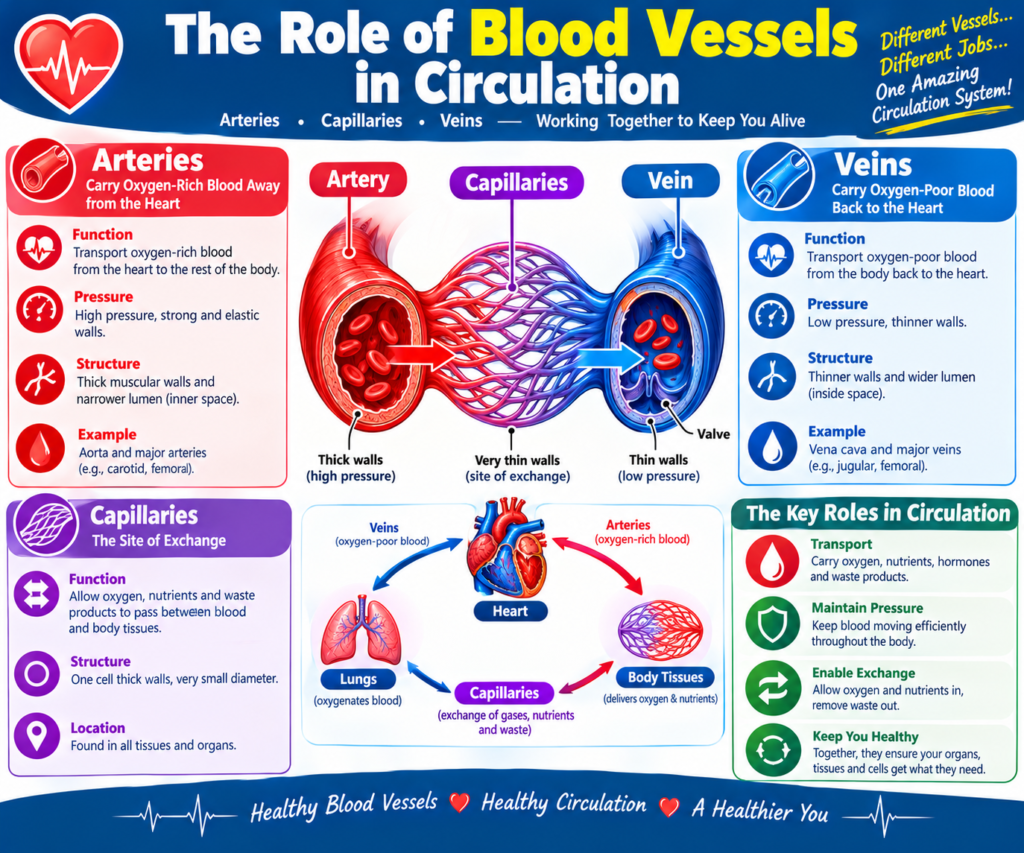
Blood vessels work together with the heart to maintain circulation.
Arteries
Arteries carry blood away from the heart. Most arteries carry oxygen-rich blood, although the pulmonary arteries carry oxygen-poor blood to the lungs.
Their strong, elastic walls help withstand the pressure produced by the heart.
Veins
Veins carry blood toward the heart. Most veins carry oxygen-poor blood, although the pulmonary veins return oxygen-rich blood from the lungs.
Many veins contain valves that help prevent blood from flowing backward, particularly in the limbs.
Muscle contractions also assist venous return.
Capillaries
Capillaries are microscopic blood vessels with very thin walls.
They allow oxygen, carbon dioxide, nutrients, water, and waste products to move between blood and surrounding tissues.
Capillaries connect the arterial and venous sides of the circulation.
Their small size and thin walls make them especially suitable for exchange.
9. How Blood Flow Through the Heart Supports the Body
Proper blood circulation is necessary for nearly every bodily function.
Oxygen Delivery
Blood carries oxygen from the lungs to tissues. Cells use this oxygen to produce energy required for movement, growth, repair, and normal organ function.
Nutrient Transportation
Blood transports nutrients absorbed from food, including glucose, amino acids, vitamins, and minerals, to the tissues that need them.
Waste Removal
Blood carries carbon dioxide away from tissues to the lungs, where it is exhaled. It also transports other waste products toward the kidneys and liver for processing and removal.
Temperature Regulation
Blood helps distribute heat throughout the body. Changes in blood flow near the skin can help regulate body temperature.
Hormone Transportation
Blood carries hormones from endocrine glands to organs and tissues where they influence growth, metabolism, reproduction, and other processes.
The cardiovascular system therefore supports the body’s ability to maintain stable internal conditions.
10. Common Problems That Affect Blood Flow Through the Heart
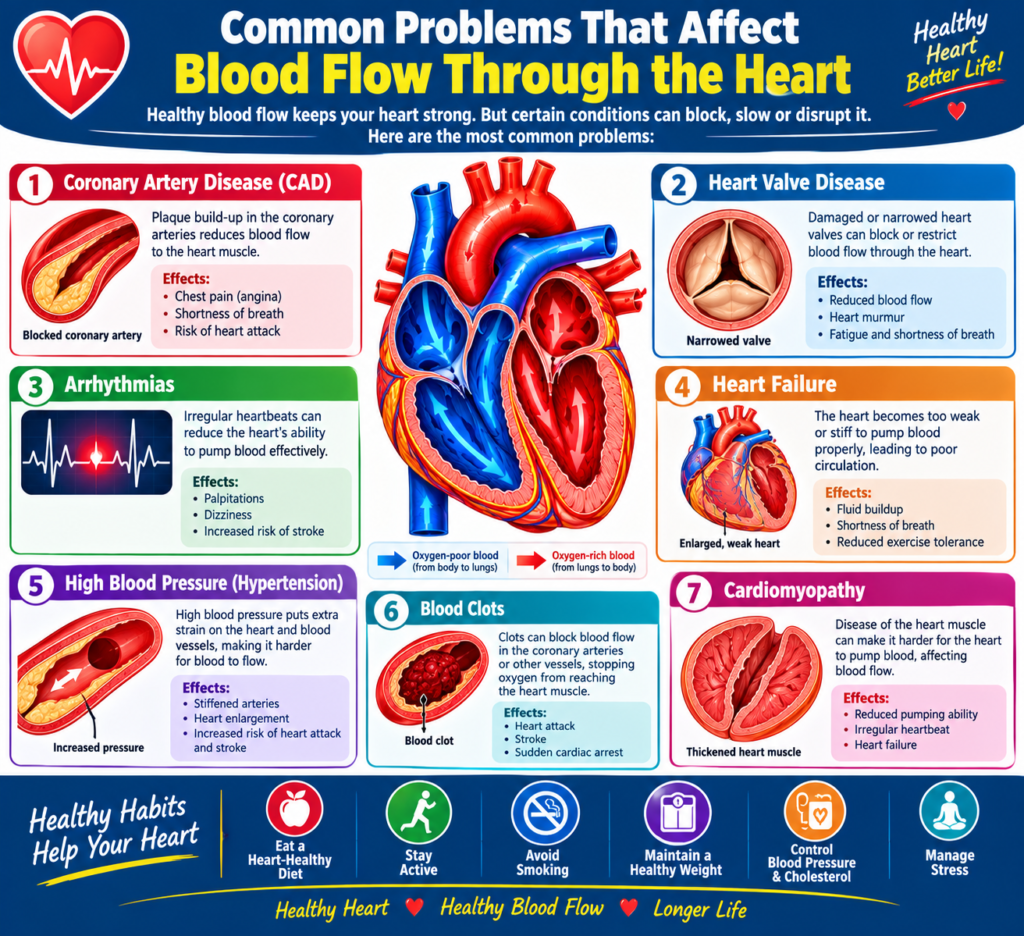
Several medical conditions can interfere with normal circulation.
Coronary Artery Disease
Coronary artery disease occurs when the blood vessels supplying the heart muscle become narrowed, often because of plaque buildup.
Reduced blood flow to the heart muscle can cause chest discomfort or shortness of breath. A complete blockage may cause a heart attack.
Heart Valve Disease
Heart valve disease occurs when one or more valves become narrowed or fail to close properly.
Valve problems can disrupt normal blood flow and make the heart work harder.
Heart Failure
Heart failure occurs when the heart cannot pump enough blood to meet the body’s needs or can do so only with elevated filling pressures.
It may cause breathlessness, fatigue, and swelling in the legs or ankles.
Arrhythmias
Arrhythmias are abnormal heart rhythms. Some cause the heart to beat too quickly, too slowly, or irregularly.
Depending on the type, an arrhythmia can reduce pumping efficiency or increase the risk of complications.
Congenital Heart Defects
Congenital heart defects are structural problems present from birth.
Some defects affect the heart chambers, valves, or major blood vessels and can change the normal pathway of blood flow.
The effects depend on the type and severity of the defect.
11. How to Maintain Healthy Blood Circulation
Healthy lifestyle habits can reduce the risk of cardiovascular disease and support normal heart function.
1. Exercise regularly. Walking, cycling, swimming, and other appropriate physical activities help support cardiovascular fitness.
2. Eat a balanced diet. Include vegetables, fruits, whole grains, legumes, nuts, and other nutrient-rich foods. Limit excessive salt, added sugars, and unhealthy fats.
3. Avoid smoking. Smoking damages blood vessels and increases the risk of heart disease and stroke.
4. Maintain a healthy weight. A healthy weight can help reduce the risk of high blood pressure, diabetes, and other cardiovascular risk factors.
5. Monitor blood pressure and cholesterol. High blood pressure and unhealthy cholesterol levels can damage blood vessels over time. Regular checkups can help identify problems early.
6. Manage diabetes. Keeping blood glucose within the recommended range helps reduce the risk of damage to the heart and blood vessels.
7. Get adequate sleep. Consistent, sufficient sleep supports overall cardiovascular health.
8. Follow medical advice. If you have a heart condition, take prescribed medicines as directed and attend recommended follow-up appointments.
These habits support long-term cardiovascular health but cannot replace medical treatment when a heart or blood vessel condition is present.
12. When Should You Seek Medical Attention?
Heart and circulation problems can sometimes develop gradually, but certain symptoms require immediate attention.
Seek emergency medical care if you experience:
- Chest pressure, squeezing, or pain that may spread to the arm, back, neck, or jaw.
- Sudden or severe shortness of breath.
- Fainting accompanied by chest discomfort or other concerning symptoms.
- Sudden weakness on one side of the body, facial drooping, or difficulty speaking.
These symptoms may indicate a heart attack, stroke, or another medical emergency.
Do not delay emergency care while waiting for symptoms to disappear.
You should also arrange a medical evaluation if you experience persistent unexplained fatigue, recurring dizziness, unusual breathlessness during activity, or swelling in your legs or ankles.
Early diagnosis can help identify circulation problems and determine appropriate treatment.
Conclusion: Understanding Blood Flow Through the Heart
Blood flow through the heart is a continuous process that keeps the human body alive. The right side of the heart receives oxygen-poor blood from the body and pumps it to the lungs. The lungs remove carbon dioxide and add oxygen. The left side of the heart then receives oxygen-rich blood and pumps it through the aorta to supply the body’s tissues.
The four chambers, four valves, major blood vessels, and electrical conduction system work together to maintain efficient circulation.
Pulmonary circulation connects the heart to the lungs, while systemic circulation supplies oxygen and nutrients to the rest of the body. Together, these processes support energy production, waste removal, temperature regulation, and normal organ function.
Learning how blood travels through the heart also helps explain why conditions such as coronary artery disease, valve disorders, arrhythmias, and heart failure can affect health.
Regular exercise, balanced nutrition, avoiding smoking, monitoring cardiovascular risk factors, and seeking timely medical care can help protect heart health.
Remember: The heart is not simply a pump; it is the central organ of a coordinated circulatory system that delivers the oxygen and nutrients required for life.
SEO Details
SEO Title: Blood Flow Through the Heart: Complete Guide to Circulation
Focus Keyword: Blood Flow Through the Heart
Meta Description: Learn how blood flows through the heart, including its four chambers, valves, pulmonary circulation, systemic circulation, and tips for maintaining heart health.
Suggested URL Slug: blood-flow-through-the-heart
Suggested Image Alt Text: Blood Flow Through the Heart: Diagram of the Four Chambers, Heart Valves, and Blood Circulation
Related Keywords:
- How blood flows through the heart
- Blood circulation through the heart
- Four chambers of the heart
- Heart valves and their functions
- Pulmonary circulation
- Systemic circulation
- Human circulatory system
- Oxygen-rich and oxygen-poor blood
- Heart anatomy and function
- Cardiovascular health



[…] Consistency is more important than intensity. The aim is to develop a comfortable relationship with breathing rather than forcing yourself to achieve a particular result.Blood Flow Through the Heart […]