
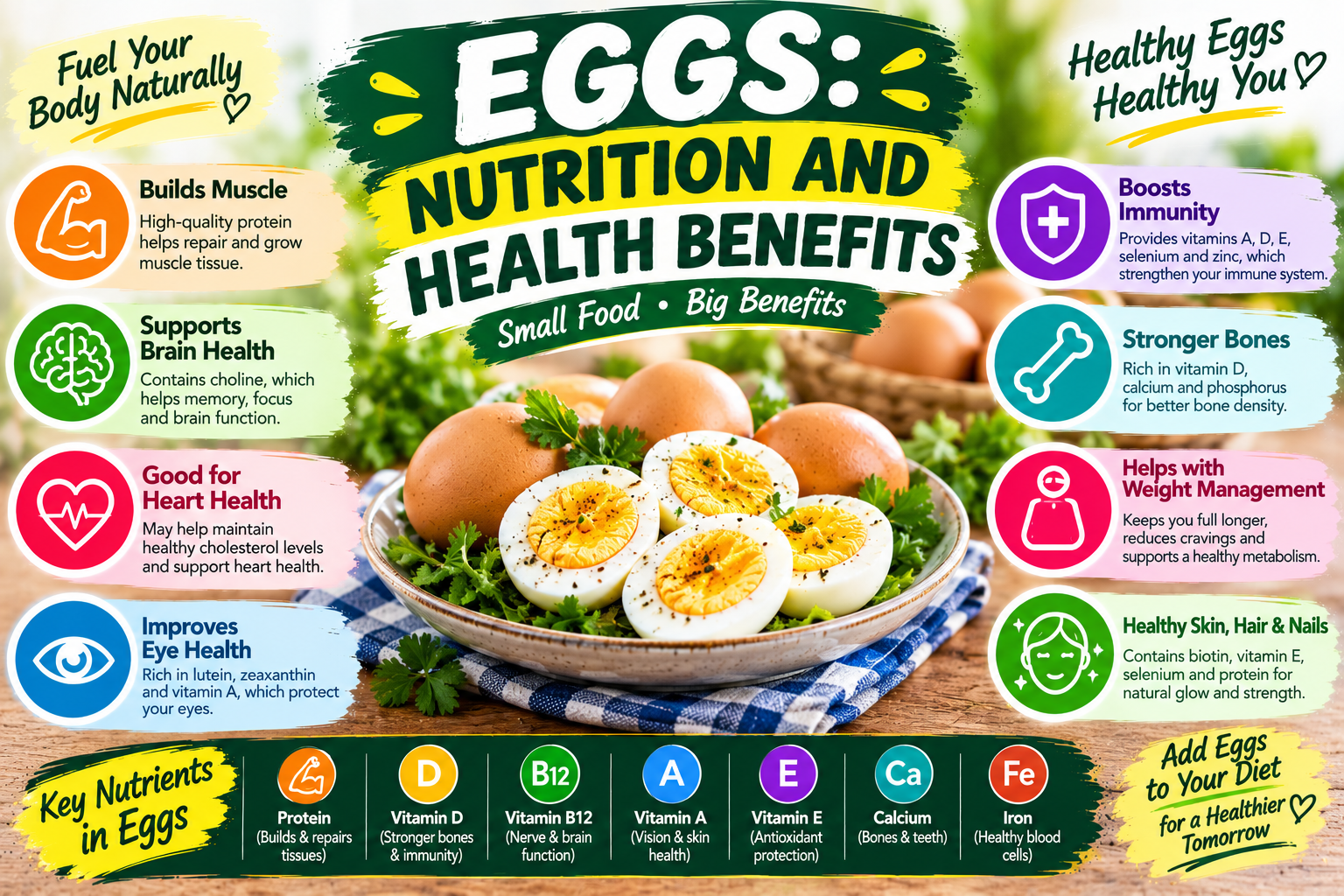


Eggs: Nutrition and Health Benefits — 10 Powerful Reasons to Eat Them
Discover Eggs: Nutrition and Health Benefits, including protein, vitamins, minerals, choline, eye health, and 10 powerful reasons eggs can support a balanced diet.
Table of Contents
- Introduction
- Eggs: Nutrition and Health Benefits
- Egg Nutrition Facts
- 10 Powerful Health Benefits of Eggs
- Eggs and High-Quality Protein
- Eggs and Brain Health
- Eggs and Eye Health
- Eggs and Heart Health
- Are Eggs Healthy to Eat Every Day?
- How to Add Eggs to a Healthy Diet
- Frequently Asked Questions
- Final Thoughts
Introduction
Eggs: Nutrition and Health Benefits make eggs one of the most popular and versatile foods around the world. Eggs provide high-quality protein along with several vitamins and minerals that can contribute to a balanced eating pattern.
Eggs are also relatively affordable, easy to prepare, and suitable for breakfast, lunch, dinner, and snacks. They can be boiled, scrambled, poached, baked, or added to salads and other dishes.
While eggs are nutrient-rich, the overall health impact of your diet depends on your complete eating pattern, portion sizes, cooking methods, and individual nutritional needs.
Let’s explore the nutrition profile and potential benefits of including eggs in a balanced diet.
Eggs: Nutrition and Health Benefits
The nutritional value of eggs comes from a combination of protein, healthy fats, vitamins, minerals, and other bioactive compounds.
A large egg provides roughly 6 grams of protein, although the exact nutritional values can vary slightly depending on egg size.
Eggs contain nutrients such as:
- Protein
- Vitamin B12
- Riboflavin
- Vitamin D
- Vitamin A
- Selenium
- Choline
- Phosphorus
- Iodine
- Healthy fats
The yolk contains many of the egg’s vitamins, minerals, fats, and choline, while the egg white is particularly rich in protein.
For detailed nutrient information, you can refer to the USDA FoodData Central database.
Egg Nutrition Facts
Eggs are nutrient-dense foods, meaning they provide a variety of nutrients relative to their calorie content.
A large whole egg generally contains around:
| Nutrient | Approximate Amount |
|---|---|
| Calories | 70–80 |
| Protein | 6–7 g |
| Fat | 5 g |
| Carbohydrates | Less than 1 g |
| Choline | About 150 mg |
| Selenium | About 15 mcg |
| Vitamin B12 | About 0.5 mcg |
Values vary according to egg size and other factors, so check the package or nutrition database for exact information.
*Eggs: Nutrition and Health Benefits
10 Powerful Health Benefits of Eggs

1. Eggs Provide High-Quality Protein
One of the most important Eggs: Nutrition and Health Benefits is their high-quality protein.
Protein is needed for building and maintaining muscles, tissues, enzymes, and other important structures in the body.
Eggs contain all nine essential amino acids, making them a complete protein source.
Adding eggs to meals can therefore be a convenient way to increase protein intake.
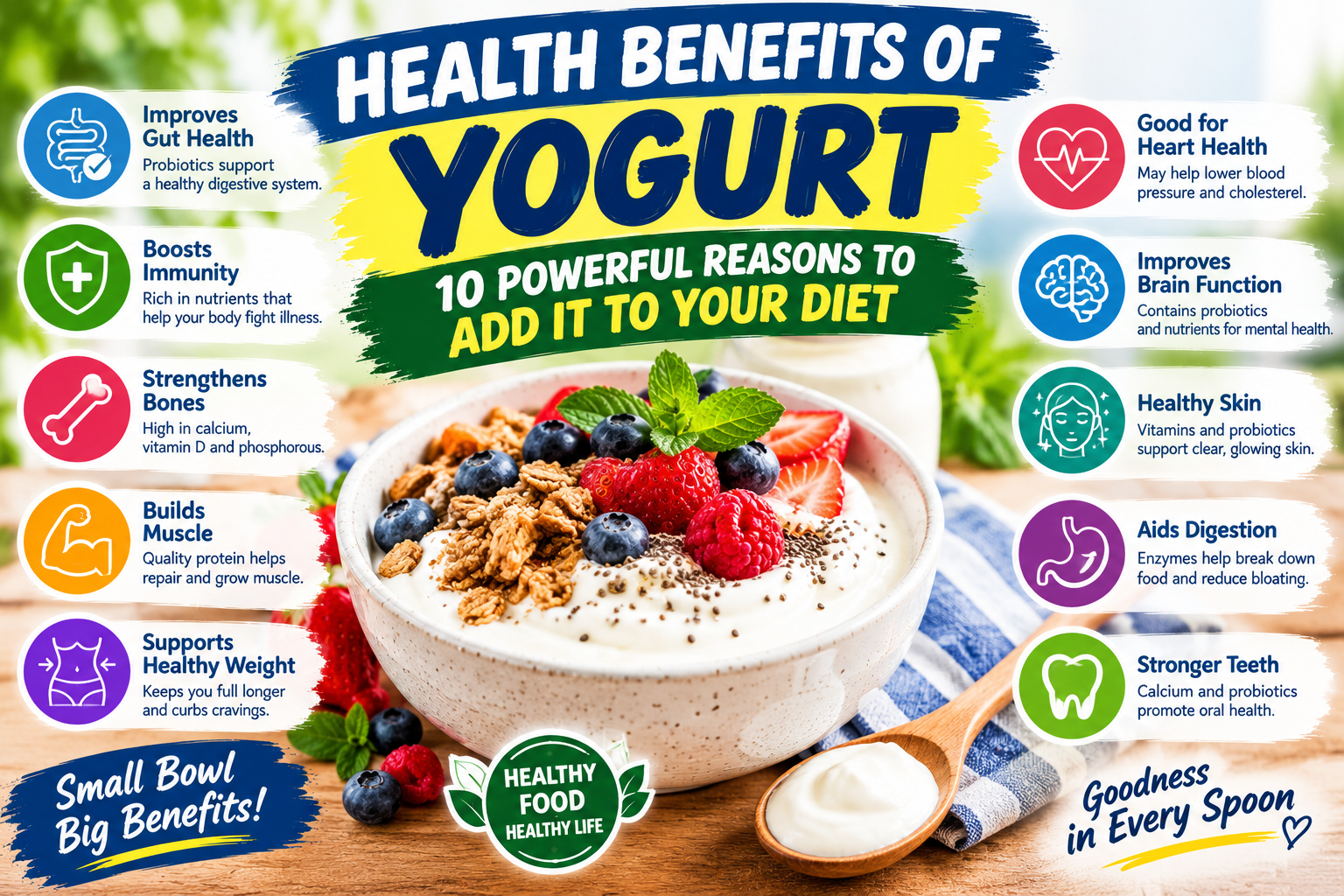
For more information about protein-rich foods, see our related article on Health Benefits of Yogurt.
2. Eggs Support Muscle Maintenance
Protein plays an important role in maintaining muscle mass.
For people who exercise regularly, adequate protein combined with resistance training can support muscle maintenance and development.
Eggs are convenient after exercise because they provide protein without requiring complicated preparation.
Try combining eggs with whole-grain toast and vegetables for a balanced meal.
3. Eggs Provide Choline for Brain Function
Eggs are among the better dietary sources of choline.
Choline is an essential nutrient involved in several important functions, including normal cell structure, neurotransmitter production, and liver function.
The National Institutes of Health provides detailed information about choline and its role in the body through its Office of Dietary Supplements.
Because choline is important for normal brain and nervous-system function, including eggs as part of a varied diet can help contribute to overall nutrient intake.
4. Eggs Support Eye Health
Egg yolks contain carotenoids such as lutein and zeaxanthin.
These compounds are found in the retina and are associated with eye health.
A balanced diet containing eggs along with colorful vegetables such as spinach, kale, carrots, and peppers can provide a variety of nutrients important for maintaining healthy vision.
Eggs should not be considered a treatment for eye disease, but they can be part of a nutrient-rich eating pattern.
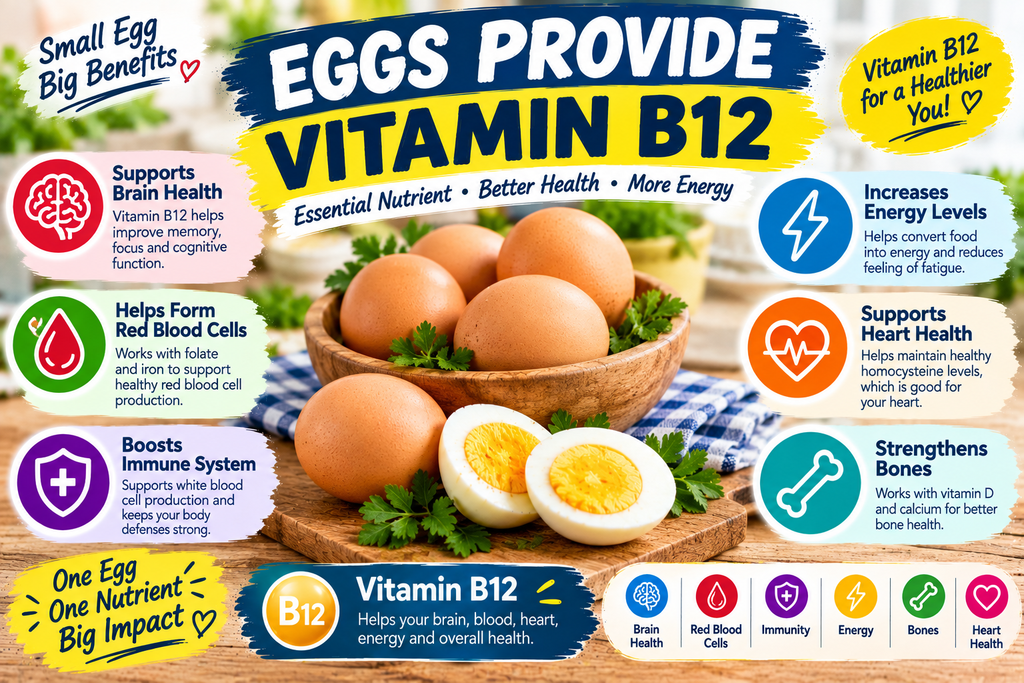
5. Eggs Provide Vitamin B12
Vitamin B12 is important for normal red blood cell formation, nervous-system function, and DNA synthesis.
Eggs provide vitamin B12, making them one possible source of this nutrient.
People following vegetarian or mostly plant-based diets may need to pay particular attention to B12 intake because reliable sources can be limited without fortified foods or supplements.
6. Eggs Contain Selenium
Selenium is an essential mineral that contributes to normal thyroid function, antioxidant protection, and immune-system function.
Eggs provide selenium in addition to several other micronutrients.
Including a variety of foods rather than relying on one food is the best way to obtain a broad range of essential nutrients.
7. Eggs Can Help Make Meals More Filling
The combination of protein and fat in whole eggs can contribute to meal satisfaction.
A breakfast containing eggs, vegetables, and whole grains may be more filling than a breakfast consisting mainly of refined carbohydrates.
Feeling satisfied after meals can be helpful when building sustainable eating habits.
However, eggs themselves should not be viewed as a guaranteed weight-loss food.
*Eggs: Nutrition and Health Benefits
8. Eggs Are Highly Versatile
Another major benefit of eggs is their versatility.
You can use eggs in:
- Omelets
- Scrambled eggs
- Boiled eggs
- Poached eggs
- Egg sandwiches
- Salads
- Vegetable bowls
- Breakfast wraps
- Rice dishes
- Baked recipes
This makes it easy to incorporate eggs into different cuisines and meal plans.

9. Eggs Provide Several Important Vitamins and Minerals
Eggs contain multiple micronutrients, including vitamins A, D, B12, and riboflavin, as well as minerals such as selenium and phosphorus.
The exact amount of each nutrient varies depending on the egg and serving size.
Eating eggs alongside vegetables, fruits, whole grains, legumes, and other nutritious foods can create a more balanced diet.
10. Eggs Can Be Part of a Heart-Healthy Eating Pattern
For many healthy people, eggs can fit into an overall heart-healthy dietary pattern.
However, cardiovascular health is influenced by the entire diet and lifestyle—not by one food alone.
It is useful to focus on the overall quality of your diet, including vegetables, fruits, whole grains, legumes, nuts, seeds, and appropriate sources of protein.
For people with specific cholesterol or cardiovascular concerns, dietary recommendations should be individualized with a healthcare professional.
Eggs and High-Quality Protein
Egg protein is considered high quality because it provides all essential amino acids in useful proportions.
The protein is divided between the white and yolk, although the white contains a larger proportion of the egg’s protein.
If your goal is to increase protein intake, you can combine whole eggs with additional egg whites, Greek yogurt, beans, or other protein-rich foods.
For another protein-rich option, read our article on Health Benefits of Yogurt and Protein.
Eggs and Brain Health
Choline is one of the nutrients that makes eggs particularly interesting from a nutrition perspective.
The body needs choline for normal cellular function and the production of acetylcholine, a neurotransmitter involved in memory, mood, muscle control, and other functions.
However, eating eggs should not be presented as a guaranteed way to improve memory or prevent neurological disease.
A healthy brain-supporting diet should include a variety of nutrient-rich foods.
Eggs and Eye Health
Egg yolks contain lutein and zeaxanthin, two carotenoids associated with eye health.
These nutrients are also found in green leafy vegetables and other colorful foods.
Combining eggs with vegetables can therefore create a nutrient-rich meal.
For example, try an omelet with spinach, tomatoes, onions, and peppers.
Are Eggs Healthy to Eat Every Day?
For many people, eggs can be included regularly as part of a balanced diet.
However, individual nutritional needs vary. People with certain medical conditions or specific cholesterol concerns may need personalized dietary guidance.
The American Heart Association provides guidance on eggs and dietary cholesterol through its heart-healthy nutrition resources.
Instead of focusing only on whether eggs are “good” or “bad,” consider the entire meal and overall diet.
For example, boiled eggs with vegetables and whole grains are nutritionally different from eggs regularly consumed with processed meats and highly refined foods.
How to Add Eggs to a Healthy Diet
Here are some simple ideas:
Healthy Breakfast
Combine two eggs with vegetables and whole-grain toast.
Protein Bowl
Add boiled eggs to a bowl containing vegetables, beans, quinoa, and avocado.
Egg Salad
Use boiled eggs with vegetables and a yogurt-based dressing.
Vegetable Omelet
Add spinach, mushrooms, tomatoes, onions, and peppers to an omelet.
Quick Snack
A boiled egg with fruit or a handful of nuts can make a convenient snack.
Healthy Cooking Tips for Eggs
Cooking methods can affect the overall nutritional quality of an egg-based meal.
Consider:
- Boiling eggs
- Poaching eggs
- Scrambling with vegetables
- Making vegetable omelets
- Baking eggs
- Using moderate amounts of cooking oil
Try to limit heavily processed accompaniments such as processed meats and excessive amounts of butter or salt.
Frequently Asked Questions
Are eggs a good source of protein?
Yes. Eggs provide high-quality protein and contain all nine essential amino acids.
Are eggs good for your eyes?
Egg yolks contain lutein and zeaxanthin, nutrients associated with eye health. A varied diet rich in vegetables and other nutrient-dense foods is also important.
What nutrients are found in eggs?
Eggs provide protein, choline, selenium, vitamin B12, riboflavin, vitamin A, vitamin D, and phosphorus, among other nutrients.
Is the egg yolk healthy?
The yolk contains many of the egg’s vitamins, minerals, fats, choline, lutein, and zeaxanthin. Whether whole eggs fit your diet depends on your individual nutritional needs.
Can I eat eggs every day?
Many people can include eggs regularly in a balanced diet. If you have a medical condition or specific cholesterol concerns, ask your healthcare professional for personalized advice.
Are boiled eggs healthier than fried eggs?
Boiled eggs can be a simple option because they do not require added cooking fat. However, the nutritional quality of the complete meal matters more than the cooking method alone.
Final Thoughts
Eggs: Nutrition and Health Benefits include their high-quality protein, choline, selenium, vitamin B12, and other important nutrients.
Eggs can support a balanced diet by providing convenient nutrition and can be combined with vegetables, whole grains, legumes, fruits, and other healthy foods.
The best approach is to focus on overall dietary quality rather than relying on one food for health.
If you enjoy eggs, simple preparations such as boiled eggs, vegetable omelets, and eggs with whole grains can be nutritious additions to your regular meals.
Medical disclaimer: This article is for general educational purposes only and does not replace personalized medical advice. If you have a medical condition, high cholesterol, or specific dietary requirements, consult a qualified healthcare professional.

[…] can also read Eggs: Nutrition and Health Benefits to learn more about eggs as a source of protein and other […]
[…] link suggestion:Read our Eggs Nutrition for more sports-related […]