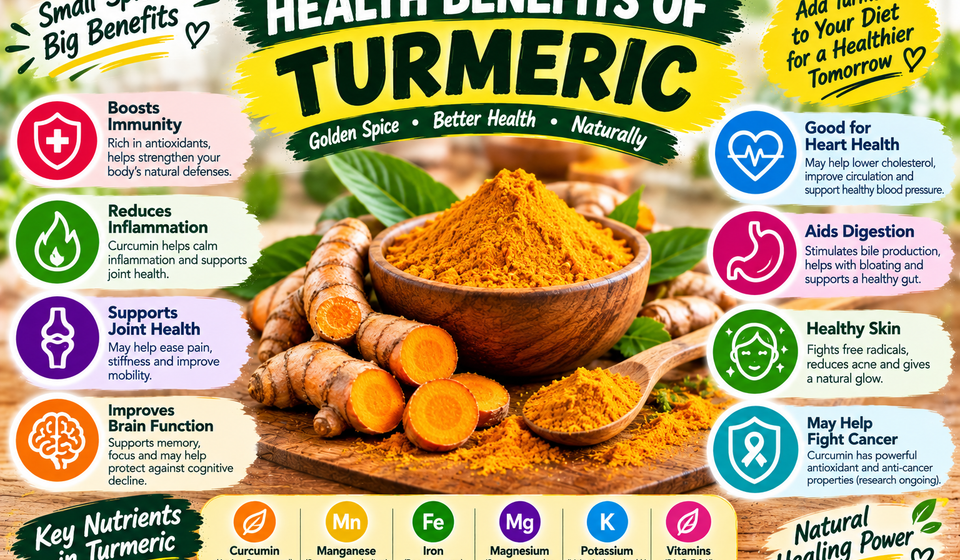


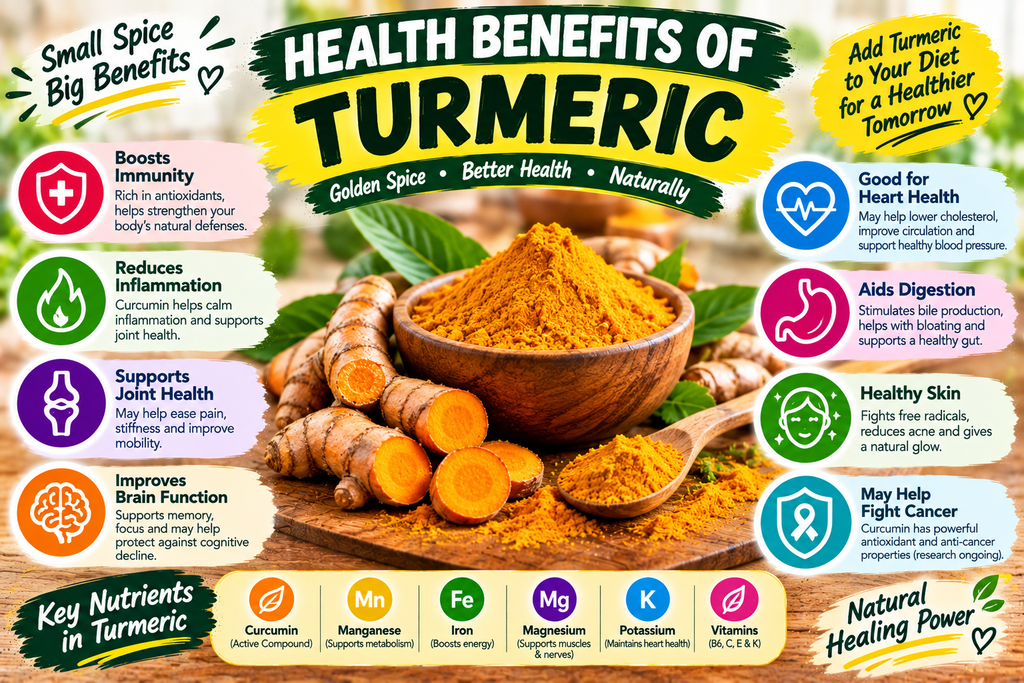
Health Benefits of Turmeric
Discover the Health Benefits of Turmeric and Curcumin, including antioxidant and anti-inflammatory properties, joint support,and practical ways to use turmeric.
Table of Contents
- Introduction
- What Are Turmeric and Curcumin?
- Health Benefits of Turmeric and Curcumin
- Turmeric and Antioxidant Protection
- Turmeric and Inflammation
- How to Use Turmeric
- Turmeric With Black Pepper
- Turmeric Safety and Precautions
- Frequently Asked Questions
- Final Thoughts
Introduction
The Health Benefits of Turmeric and Curcumin have attracted significant attention because turmeric contains curcuminoids, including curcumin, compounds that have been extensively studied for their antioxidant and anti-inflammatory properties.
Turmeric is a bright yellow spice commonly used in Indian and South Asian cooking. It belongs to the ginger family and has been used traditionally for centuries.
Curcumin is one of the major active compounds found in turmeric. However, turmeric and curcumin are not exactly the same thing. Turmeric contains several compounds, while curcumin is a specific group of compounds within turmeric.
Adding turmeric to a balanced diet can be an easy way to increase the variety of herbs and spices you consume. However, turmeric should not be considered a cure or replacement for medical treatment.
What Are Turmeric and Curcumin?
Turmeric comes from the rhizome of Curcuma longa. After harvesting, the rhizome can be dried and ground into the familiar yellow-orange spice.
Curcumin is a naturally occurring compound in turmeric that has been studied in laboratory and human research.
One important limitation is that the amount of curcumin in ordinary culinary turmeric is relatively small. Therefore, research involving concentrated curcumin supplements cannot automatically be applied to a small amount of turmeric used in cooking.
The National Center for Complementary and Integrative Health (NCCIH) provides information about current research on turmeric and curcumin.
Health Benefits of Turmeric and Curcumin
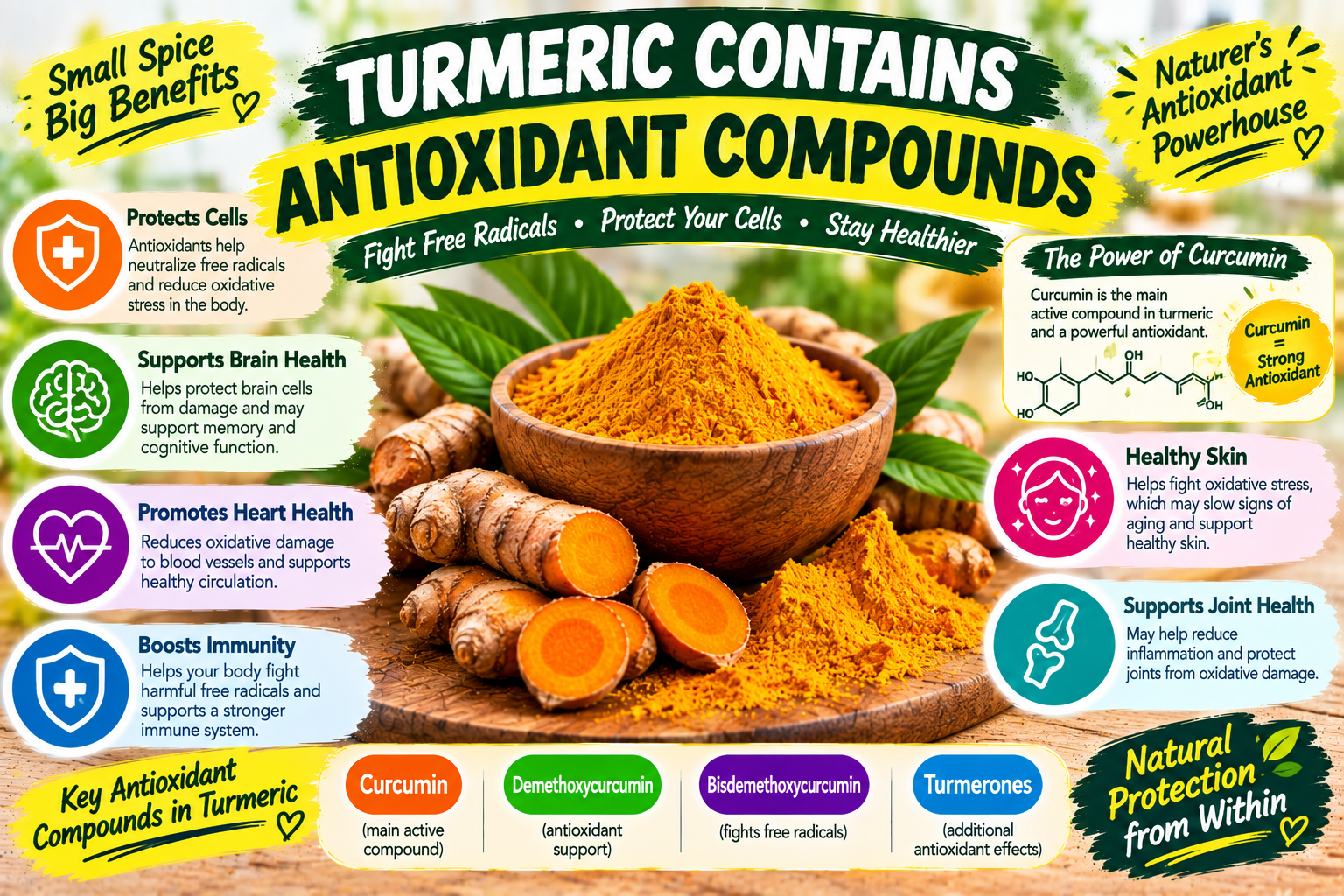
1. Turmeric Contains Antioxidant Compounds
One of the key Health Benefits of Turmeric and Curcumin is their antioxidant potential.
Antioxidants help protect cells from oxidative stress caused by reactive molecules.
Curcumin has demonstrated antioxidant activity in experimental research. However, human health is influenced by many factors, and eating turmeric alone cannot prevent all forms of oxidative stress.
A balanced diet containing fruits, vegetables, whole grains, nuts, seeds, herbs, and spices provides many different antioxidant compounds.
2. Curcumin Has Anti-Inflammatory Properties
Curcumin has been extensively studied for its potential effects on inflammatory pathways.
Inflammation is a normal biological response that helps the body respond to injury and infection. Problems can occur when inflammatory processes become persistent or dysregulated.
Research suggests that curcumin may influence several molecular pathways associated with inflammation.
However, this does not mean turmeric can replace prescribed anti-inflammatory medication or medical treatment.
3. Turmeric May Support Joint Health
Joint health is another area in which curcumin has been studied.
Some clinical research has investigated curcumin supplements in people with osteoarthritis and other joint-related symptoms. Results have been promising in some studies, although research quality, formulations, and dosages vary.
People experiencing persistent joint pain should seek appropriate medical evaluation rather than relying solely on turmeric.
4. Turmeric Provides Plant Compounds
Turmeric is more than just curcumin.
The spice contains several naturally occurring plant compounds. Using a variety of herbs and spices can increase the diversity of plant compounds in your overall diet.
Try adding turmeric to vegetables, soups, lentils, rice dishes, curries, or homemade sauces.
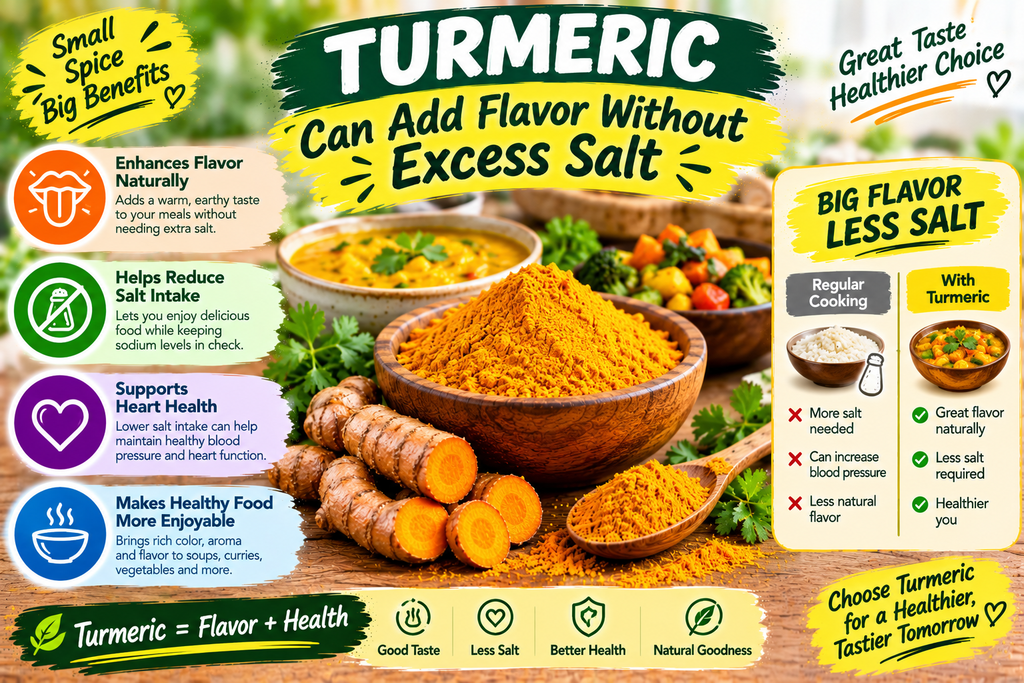
5. Turmeric Can Add Flavor Without Excess Salt
Spices can make meals more flavorful without relying heavily on salt.
Turmeric has a warm, earthy flavor and works particularly well with:
- Lentils
- Vegetables
- Rice
- Eggs
- Soups
- Beans
- Chicken
- Fish
- Curries
For example, adding turmeric to a vegetable omelet can create a flavorful and nutrient-rich meal.
You can combine this with our article Eggs: Nutrition and Health Benefits for more information about eggs as a protein-rich food.
6. Curcumin Is Being Studied for Metabolic Health
Researchers have investigated curcumin for its possible effects on metabolic health, including blood sugar and lipid-related markers.
Some studies have reported potential benefits, but the evidence is not strong enough to recommend curcumin as a replacement for standard treatment.
If you have diabetes, high cholesterol, or another metabolic condition, discuss supplements with your healthcare professional before using them.
For general nutrition, you can also read Foods That Boost Metabolism.
7. Turmeric May Complement a Healthy Diet
Turmeric can be part of an overall healthy dietary pattern.
Rather than focusing on one “superfood,” aim to eat a variety of nutrient-dense foods.
A healthy meal can combine:
- Vegetables
- Fruits
- Whole grains
- Beans and lentils
- Nuts and seeds
- Eggs
- Yogurt
- Fish or other protein sources
- Herbs and spices
For example, turmeric-spiced vegetables served with eggs and yogurt can create a varied and nutritious meal.

8. Turmeric Is Easy to Add to Everyday Meals
You do not need complicated recipes to use turmeric.
Simple ideas include:
Turmeric rice: Add a small amount of turmeric while cooking rice.
Golden milk: Combine turmeric with milk or a suitable plant-based alternative and warming spices.
Vegetable curry: Add turmeric to a curry containing vegetables and legumes.
Eggs: Add a pinch of turmeric to scrambled eggs or an omelet.
Soup: Stir turmeric into vegetable or lentil soup.
9. Turmeric May Support an Antioxidant-Rich Eating Pattern
Turmeric can contribute to a diet containing a broad range of plant compounds.
However, it is important not to exaggerate the effects. Eating turmeric does not compensate for a diet low in vegetables, fruits, fiber, and other essential nutrients.
The best approach is to use turmeric as one small part of an overall nutritious eating pattern.
10. Curcumin Continues to Be an Important Research Area
Curcumin continues to be studied for its potential effects on inflammation, joint health, metabolic markers, and other areas.
The evidence is developing, and results can differ depending on the formulation and dose used in research.
The NCCIH turmeric overview is a useful starting point for understanding what is currently known about turmeric and its potential health effects.
Turmeric and Antioxidant Protection
Curcumin can act as an antioxidant and may also influence the body’s own antioxidant systems.
However, antioxidant supplements and foods should not be viewed as a simple solution to prevent disease.
Eating a variety of colorful plant foods is a more reliable way to obtain a broad range of naturally occurring compounds.
Consider combining turmeric with foods such as spinach, tomatoes, berries, carrots, beans, nuts, and seeds.
Turmeric and Inflammation
The relationship between curcumin and inflammation is one of the most researched aspects of turmeric.
Laboratory research suggests that curcumin can influence several pathways involved in inflammatory processes.
Some human studies have also investigated curcumin supplements for conditions associated with inflammation.
Still, evidence varies between conditions and products. More research is needed to determine which formulations and doses are most useful.
Turmeric With Black Pepper
You may have heard that black pepper can increase curcumin absorption.
Piperine, a compound found in black pepper, has been shown in research to increase the bioavailability of curcumin.
This is one reason some curcumin supplements contain piperine.
However, increased absorption is not automatically the same as increased health benefit. Piperine can also affect the absorption or metabolism of certain medications.
If you take prescription medicines, speak with a healthcare professional before using concentrated curcumin supplements.
How to Use Turmeric Safely
Using normal culinary amounts of turmeric in food is generally different from taking concentrated supplements.
Turmeric and curcumin supplements can have side effects or interact with medications.
According to NCCIH, reported side effects can include digestive problems, and some highly bioavailable curcumin formulations have been associated with liver injury.
For this reason, avoid assuming that “natural” automatically means risk-free.
If you are pregnant, have a medical condition, have gallbladder problems, take prescription medications, or are considering a concentrated curcumin supplement, discuss it with a healthcare professional.
Frequently Asked Questions
What are the main Health Benefits of Turmeric and Curcumin?
The main areas of research include antioxidant activity, inflammatory pathways, and potential support for joint health. Evidence varies depending on the condition and product.
Is turmeric the same as curcumin?
No. Turmeric is a spice made from Curcuma longa. Curcumin is one of the major active compounds found in turmeric.
Can I take turmeric every day?
Culinary turmeric can commonly be included in meals. Concentrated supplements are different and should be used carefully, particularly if you take medications or have a medical condition.
Does black pepper increase curcumin absorption?
Piperine, a compound in black pepper, can increase curcumin absorption. However, it may also affect how some medications are absorbed or metabolized.
Can turmeric reduce inflammation?
Curcumin has anti-inflammatory properties and has been studied for its effects on inflammatory pathways. However, turmeric should not replace medical treatment for inflammatory diseases.
Is turmeric good for joint health?
Curcumin supplements have been studied for joint symptoms, including osteoarthritis. Some research suggests potential benefits, but results vary and more research is needed.
Can I add turmeric to eggs?
Yes. A small amount of turmeric can be added to scrambled eggs or omelets for flavor and color. You can learn more about egg nutrition in Eggs: Nutrition and Health Benefits.
Final Thoughts
The Health Benefits of Turmeric and Curcumin are an interesting area of nutrition research. Curcumin has demonstrated antioxidant and anti-inflammatory properties, while studies have investigated its possible role in joint and metabolic health.
For everyday cooking, turmeric is a simple spice that can add flavor and variety to meals. Use it alongside a diet rich in vegetables, fruits, whole grains, legumes, nuts, seeds, quality protein, and other herbs and spices.
Concentrated curcumin supplements are different from culinary turmeric and may not be appropriate for everyone. If you take medication or have an underlying health condition, consult a qualified healthcare professional before using a supplement.
Medical Disclaimer: This article is for educational purposes only and is not intended to diagnose, treat, cure, or prevent any disease. Always seek professional medical advice for personal health concerns.