
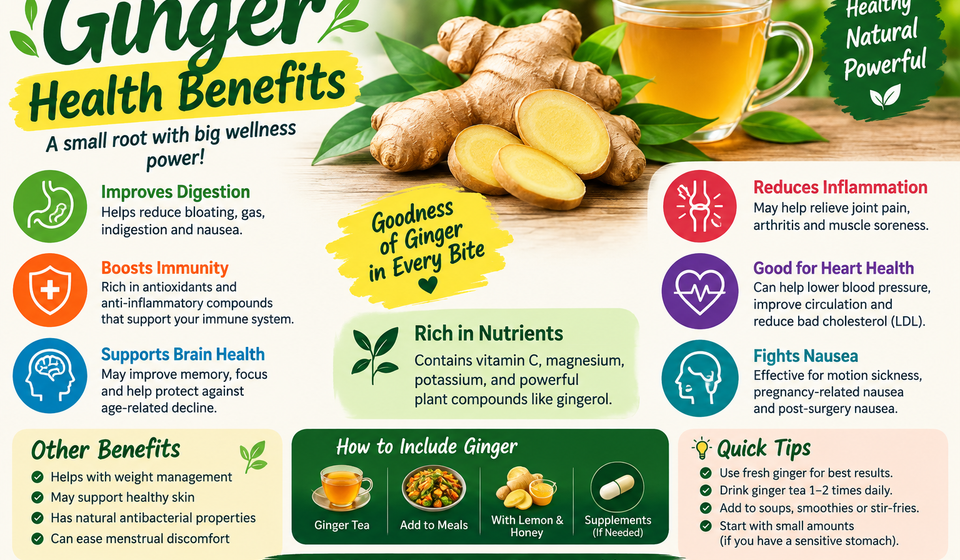


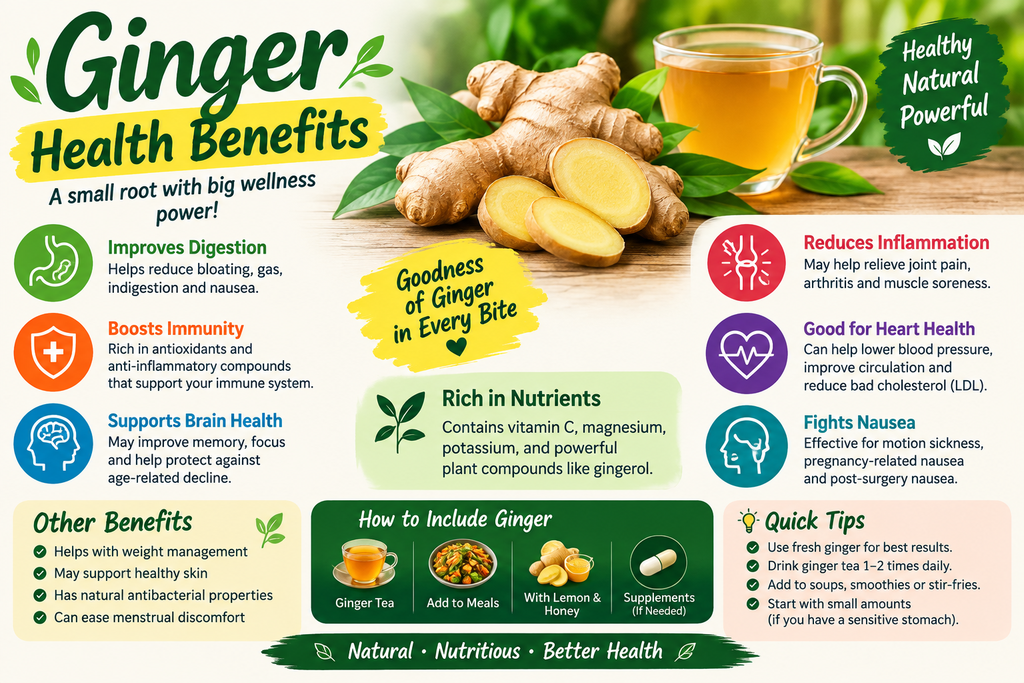
Ginger Health Benefits: 10 Powerful Benefits for Digestion, Nausea, and More
Discover Ginger Health Benefits, including digestive support, nausea relief, antioxidant properties, and practical ways to add ginger to your daily diet.
Table of Contents
- Introduction
- What Is Ginger?
- Ginger Health Benefits
- Ginger for Digestion
- Ginger for Nausea
- Ginger and Antioxidant Properties
- Ginger for Inflammation
- How to Add Ginger to Your Diet
- Ginger Tea Benefits
- Ginger Safety and Precautions
- Frequently Asked Questions
- Final Thoughts
Introduction
Ginger Health Benefits have been studied for many years, particularly for digestive symptoms and nausea. Ginger is a flavorful root commonly used in Asian cuisine, beverages, and traditional health practices.
Ginger contains naturally occurring compounds called gingerols and related compounds that contribute to its characteristic taste and aroma.
Research suggests that ginger may help with certain types of nausea and may influence digestive processes. However, ginger is not a cure for every digestive problem, and evidence varies depending on the condition.
Adding small amounts of ginger to meals or beverages can be a simple way to enjoy this flavorful spice as part of a balanced diet.
What Is Ginger?
Ginger comes from the rhizome of the plant Zingiber officinale.
It can be consumed fresh, dried, powdered, or prepared as tea. Ginger is widely used in cooking because of its warm, spicy flavor.
Important naturally occurring compounds in ginger include:
- Gingerols
- Shogaols
- Zingerone
- Other aromatic compounds
Fresh and dried ginger can have somewhat different chemical profiles because processing can change some of these compounds.
The National Center for Complementary and Integrative Health (NCCIH) provides information about current research and safety considerations related to ginger.
Ginger Health Benefits
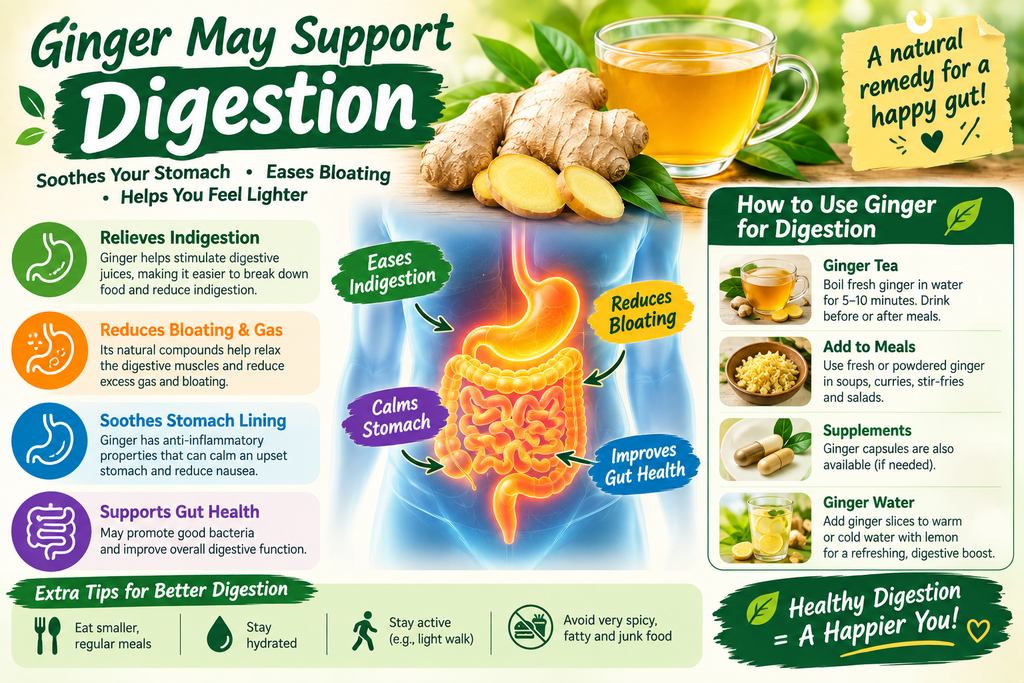
1. Ginger May Support Digestion
One of the best-known Ginger Health Benefits is its potential role in digestive health.
Ginger may influence gastrointestinal movement and help food move through the stomach and digestive tract.
Some research has investigated ginger for symptoms such as indigestion and bloating, although results vary.
Adding fresh ginger to meals can provide flavor while potentially supporting normal digestive function.
For another nutritious food that may fit into a balanced diet, read our article on Health Benefits of Yogurt.
2. Ginger May Help With Nausea
Ginger has been widely studied for nausea.
Research suggests that ginger may help reduce certain types of nausea, including nausea associated with pregnancy and some medical treatments.
However, the appropriate amount and form can vary.
Pregnant people should discuss the use of concentrated ginger supplements with their healthcare professional rather than assuming that supplements are automatically safe.
For persistent, severe, or unexplained nausea, medical evaluation is important.
3. Ginger Contains Antioxidant Compounds
Ginger contains naturally occurring compounds with antioxidant activity.
Antioxidants help protect cells from oxidative stress.
Ginger should not be viewed as a replacement for a diet rich in fruits and vegetables. Instead, it can be one flavorful component of an overall nutrient-rich eating pattern.
You can combine ginger with foods such as vegetables, fruits, whole grains, nuts, and seeds.
4. Ginger Has Anti-Inflammatory Properties
Ginger contains bioactive compounds that have demonstrated anti-inflammatory activity in experimental research.
Inflammation is a normal part of the body’s response to injury and infection. Long-term inflammatory processes are more complex and can be associated with many health conditions.
Some human research has examined ginger and inflammatory markers, but evidence differs between conditions.
Ginger should therefore be considered a food or complementary ingredient rather than a replacement for prescribed treatment.
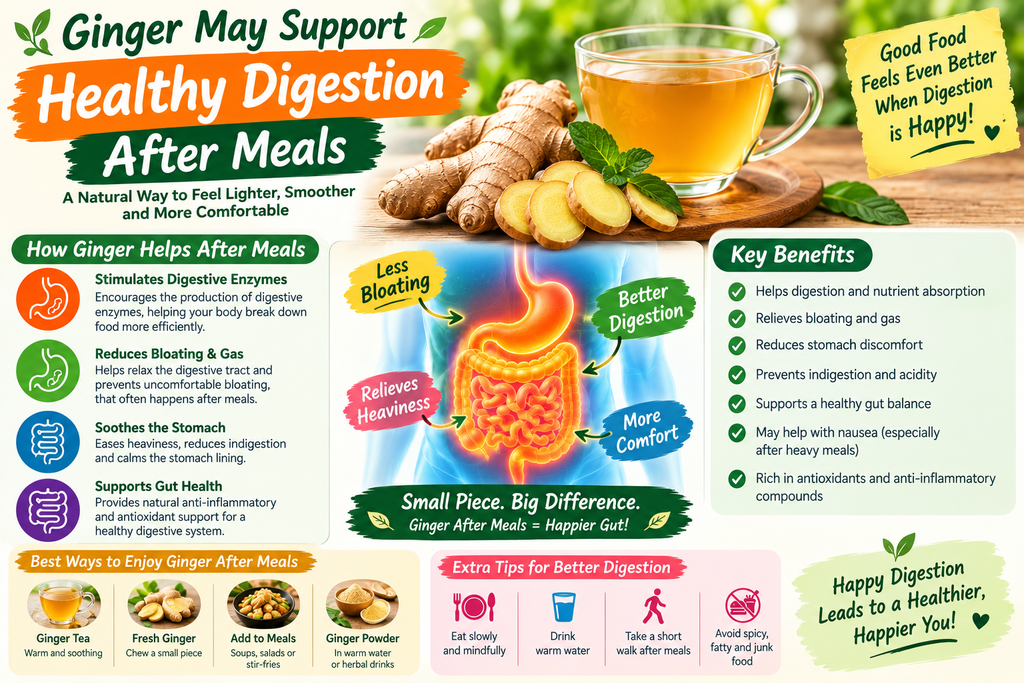
5. Ginger May Support Healthy Digestion After Meals
Some people enjoy ginger tea after meals because of its warming flavor and potential digestive effects.
Ginger may affect gastric motility, which is the movement of food through the stomach.
If you experience frequent indigestion, abdominal pain, vomiting, or unexplained digestive symptoms, consult a healthcare professional rather than relying on ginger alone.
6. Ginger Can Add Flavor Without Much Sodium
Herbs and spices are useful for adding flavor without relying heavily on salt.
Fresh ginger can be grated into:
- Vegetable stir-fries
- Soups
- Lentil dishes
- Curries
- Rice dishes
- Sauces
- Smoothies
- Tea
This makes ginger a practical ingredient for people trying to make meals flavorful while moderating sodium.
7. Ginger May Complement a Healthy Diet
No single food provides all the nutrients your body needs.
Ginger works best as part of an overall healthy dietary pattern that includes vegetables, fruits, whole grains, legumes, nuts, seeds, and quality protein.
For example, a meal containing ginger-seasoned vegetables, eggs, and whole grains can provide a wide range of nutrients.
You can also read Eggs: Nutrition and Health Benefits to learn more about eggs as a source of protein and other nutrients.
8. Ginger Is Easy to Prepare
Ginger is available in several convenient forms.
Fresh ginger: Grate or slice it for cooking and tea.
Ground ginger: Convenient for baking, curries, and spice blends.
Ginger tea: Fresh ginger can be steeped in hot water.
Pickled ginger: Often served with meals, particularly Japanese dishes.
Each form has a different flavor and preparation method.
9. Ginger Tea Can Be a Healthy Beverage Choice
Unsweetened ginger tea can be a flavorful alternative to sugary beverages.
To make simple ginger tea:
- Wash and thinly slice fresh ginger.
- Add the slices to hot water.
- Allow the ginger to steep for several minutes.
- Remove the ginger pieces.
- Add lemon if desired.
If you want sweetness, use it sparingly according to your dietary preferences.
For more healthy beverage ideas, see Best Drinks for Hydration.

10. Ginger Provides Culinary Variety
One underrated benefit of ginger is its ability to make healthy foods more enjoyable.
Its spicy and aromatic flavor works particularly well with vegetables, legumes, seafood, chicken, rice, and soups.
Adding different herbs and spices can make it easier to enjoy a varied diet without depending heavily on sauces or added salt.
Ginger for Digestion
Ginger has traditionally been used to support digestion.
Modern research has examined its potential effects on gastric emptying and gastrointestinal movement.
Some studies suggest that ginger may help the stomach empty more efficiently in certain situations. However, digestive symptoms have many possible causes, so ginger may not be appropriate for everyone.
If symptoms such as severe abdominal pain, persistent vomiting, unexplained weight loss, or blood in the stool occur, seek medical care promptly.
Ginger for Nausea
Nausea is one of the areas where ginger has received considerable scientific attention.
Studies have examined ginger for:
- Pregnancy-related nausea
- Postoperative nausea
- Nausea associated with certain medical treatments
- Motion-related symptoms
The strength of evidence varies depending on the cause of nausea.
The NCCIH ginger resource provides an overview of what research has found and important safety information.

Ginger Provides Culinary Variety inger and Antioxidant Properties
Ginger’s naturally occurring compounds have antioxidant activity.
Oxidative stress occurs when reactive molecules can overwhelm the body’s antioxidant defenses.
A varied diet containing vegetables, fruits, legumes, whole grains, nuts, seeds, herbs, and spices provides many antioxidant compounds.
Ginger can complement this pattern but should not be considered a standalone antioxidant treatment.
How to Add Ginger to Your Diet
Try these simple ideas:
Morning Ginger Drink
Add a few slices of fresh ginger to hot water with lemon.
Ginger Vegetable Stir-Fry
Combine grated ginger with vegetables, garlic, and a modest amount of cooking oil.
Ginger Lentil Soup
Add fresh or powdered ginger to lentil soup for extra flavor.
Ginger and Eggs
Add a small amount of finely grated ginger to an Asian-inspired egg or vegetable dish.
For more information about egg nutrition, visit Eggs: Nutrition and Health Benefits.
Ginger Smoothie
Blend a small piece of fresh ginger with fruit, yogurt, and your preferred liquid.
You can also read Health Benefits of Yogurt for more information about yogurt’s protein and probiotic content.
Ginger Safety and Precautions
Ginger is commonly consumed as a food, but concentrated supplements are different from normal culinary amounts.
Some people may experience side effects such as:
- Heartburn
- Stomach discomfort
- Diarrhea
- Mouth irritation
High-dose ginger supplements may also interact with certain medications.
People taking blood-thinning medication or those preparing for surgery should speak with a healthcare professional before using concentrated ginger supplements.
If you are pregnant, have a medical condition, or take prescription medication, ask your healthcare professional about the appropriate amount and form of ginger.
Frequently Asked Questions
What are the main Ginger Health Benefits?
Ginger has been studied particularly for nausea and digestive symptoms. It also contains compounds with antioxidant and anti-inflammatory activity.
Can ginger help with nausea?
Research suggests ginger may help with certain types of nausea, including pregnancy-related nausea. The cause and severity of nausea matter, so persistent symptoms should be evaluated medically.
Is ginger good for digestion?
Ginger may influence gastrointestinal movement and digestion. Some people find it helpful for digestive discomfort, although research results vary.
Can I drink ginger tea every day?
For many people, moderate amounts of ginger as a food or beverage can fit into a balanced diet. However, concentrated supplements require more caution.
Does ginger have anti-inflammatory properties?
Yes. Ginger contains compounds that demonstrate anti-inflammatory activity in laboratory research, and human studies have investigated possible effects on inflammatory symptoms.
Is fresh ginger better than powdered ginger?
Both can be useful. Fresh and dried ginger have different chemical profiles and flavors, so the best choice depends on how you want to use it.
Can I eat ginger with eggs?
Yes. Ginger can be used as a seasoning in egg dishes. For more information, read Eggs: Nutrition and Health Benefits.
Final Thoughts
The Ginger Health Benefits most strongly associated with research include potential support for certain types of nausea and digestive function. Ginger also contains naturally occurring compounds with antioxidant and anti-inflammatory properties.
Fresh ginger, powdered ginger, and unsweetened ginger tea can all be convenient ways to include this flavorful ingredient in your diet.
For the best overall health benefits, use ginger as part of a balanced eating pattern rather than relying on it as a treatment for disease.
If you are considering concentrated ginger supplements, particularly while taking medication or managing a medical condition, speak with a qualified healthcare professional first.
Medical Disclaimer: This article is intended for general educational purposes and does not replace professional medical advice, diagnosis, or treatment.

[…] Read more healthy eating content […]