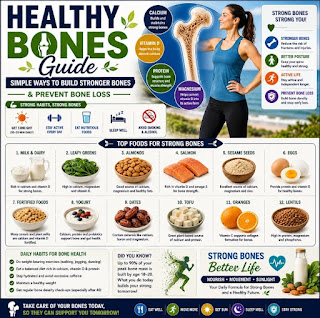


Healthy Bones Guide: Simple Ways to Build Stronger Bones & Prevent Bone Loss
Healthy Bones Guide: Tips for Strong Bones, Calcium, Vitamin D & Fitness
Meta Description
Learn how to keep your bones strong with 20 practical tips for calcium, vitamin D, protein, exercise, healthy eating, fall prevention and long-term bone health.
Introduction
Bones are living tissue that continuously changes throughout life. Maintaining bone strength is important for mobility, independence and reducing the risk of fractures as you age. A healthy diet, adequate calcium and vitamin D, regular physical activity, healthy muscles, avoiding tobacco and limiting excessive alcohol all support bone health.
Healthy bones aren’t built through one nutrient or one food. Nutrition + exercise + healthy lifestyle habits work together.
20 Healthy Bone Tips
1. Get Enough Calcium
Calcium is a major mineral in bones and helps maintain bone strength. Your body cannot make calcium, so it must come from food or, when appropriate, supplements.
Good sources include:
- Milk
- Yogurt
- Cheese
- Calcium-fortified foods
- Tofu made with calcium
- Some leafy green vegetables
- Canned fish with edible bones
2. Get Enough Vitamin D
Vitamin D helps your body absorb calcium.
Sources include:
- Sunlight
- Fatty fish
- Egg yolks
- Fortified foods
- Supplements when medically appropriate
If you have concerns about vitamin D levels, speak with a healthcare professional rather than taking high-dose supplements on your own.
3. Eat Enough Protein
Protein supports muscles as well as bones.
Include:
- Eggs
- Fish
- Milk and yogurt
- Dal
- Lentils
- Beans
- Soy/tofu
- Chicken
- Nuts and seeds
4. Eat Plenty of Vegetables
Vegetables provide vitamins, minerals, fiber and other nutrients that contribute to an overall healthy diet.
Try to include a variety of colors.
5. Include Leafy Greens
Spinach, kale and other leafy greens provide several nutrients. However, calcium absorption varies between vegetables, so don’t rely on one vegetable as your only calcium source.
6. Eat Calcium-Rich Dairy or Alternatives
Milk, yogurt and cheese can be convenient calcium sources. Fortified plant-based beverages can also provide calcium when appropriately fortified.
7. Eat Fish Regularly
Fatty fish such as salmon and sardines can provide vitamin D and protein. Some canned fish with soft edible bones also provides calcium.
8. Choose Weight-Bearing Exercise
Weight-bearing activity makes bones work against gravity.
Examples include:
- Brisk walking
- Jogging
- Dancing
- Stair climbing
- Tennis
- Hiking
Weight-bearing exercise can help maintain or improve bone strength.
9. Do Strength Training
Resistance exercises place controlled stress on bones and strengthen muscles.
Options include:
- Free weights
- Resistance bands
- Weight machines
- Bodyweight exercises
10. Practice Balance Exercises
Balance training is especially important as people age because better balance can reduce the risk of falls and fractures.
Examples include:
- Tai chi
- Controlled single-leg balance
- Step-ups
- Appropriate balance exercises
11. Walk Regularly
Walking is an accessible weight-bearing activity for many people.
Start with a comfortable duration and gradually increase your activity.
12. Maintain a Healthy Body Weight
Being significantly underweight can be a risk factor for poor bone health, while maintaining a healthy overall lifestyle supports bones and muscles.
Focus on nutritious food rather than extreme dieting.
13. Don’t Smoke
Smoking is associated with weaker bones and increased fracture risk. Avoiding tobacco is an important part of bone-health prevention.
14. Limit Excessive Alcohol
Heavy alcohol use can negatively affect bone health and increase fall risk.
Limiting alcohol—or avoiding it—is better for bone health than excessive consumption.
15. Get Enough Magnesium and Other Nutrients
A varied diet provides magnesium, phosphorus, vitamin K and other nutrients involved in normal bone and body function.
Good choices include:
- Nuts
- Seeds
- Beans
- Whole grains
- Vegetables
- Fruits
16. Avoid Crash Diets
Very restrictive diets can make it difficult to get enough calories, protein, calcium, vitamin D and other nutrients.
Choose sustainable eating habits instead.
17. Prevent Falls
Strong bones are important, but preventing falls is also critical.
Keep floors clear, improve lighting, use handrails where appropriate and address vision or balance problems.
18. Review Medicines With Your Doctor
Some medicines can affect bone health or increase the risk of falling. Ask your doctor or pharmacist whether your medicines could affect your bone or fall risk.
19. Get Appropriate Bone Health Screening
Some people have a higher risk of osteoporosis and may benefit from bone-density testing.
Your healthcare professional can determine whether testing is appropriate based on factors such as age, sex, previous fractures, family history and other risk factors.
20. Start Early and Stay Consistent
Bone health is a lifelong process.
Children and young adults benefit from building strong bones, while older adults can focus on maintaining bone density, muscle strength, balance and mobility.
Calcium Requirements
Calcium needs vary according to age and sex.
According to NIH guidance cited by NIAMS:
| Age/Group | Approximate Calcium Need |
|---|---|
| Children 1–3 years | 700 mg/day |
| Children 4–8 years | 1,000 mg/day |
| Ages 9–18 | 1,300 mg/day |
| Adults 19–50 | 1,000 mg/day |
| Women >50 | 1,200 mg/day |
| Men 51–70 | 1,000 mg/day |
| Men >70 | 1,200 mg/day |
Needs can differ in pregnancy and breastfeeding.
Important: More calcium isn’t automatically better. Aim for an appropriate amount rather than taking large doses without medical advice.
Best Foods for Strong Bones
Dairy Foods
- Milk
- Yogurt
- Cheese
Plant Foods
- Beans
- Lentils
- Tofu
- Leafy greens
- Nuts and seeds
Fish
- Sardines
- Salmon
- Other nutritious fish
Fortified Foods
- Calcium-fortified plant beverages
- Fortified cereals
- Other fortified foods
Calcium content varies significantly by product, so check nutrition labels when appropriate.
Best Exercises for Bone Health
A well-rounded routine can include three categories:
Weight-Bearing
Walking, jogging, dancing, stair climbing and racket sports.
Strength Training
Weights, resistance bands, machines or bodyweight exercises.
Balance Training
Tai chi, controlled balance exercises and appropriate functional movements.
NIAMS recommends combining weight-bearing, resistance and balance activities to support bones, muscles and fall prevention.
For adults generally, guidance recommends at least 150 minutes of moderate physical activity per week, along with muscle-strengthening activity at least twice weekly.
Simple Bone-Healthy Daily Routine
Morning
- Eat a nutritious breakfast.
- Include a calcium-rich food.
- Get appropriate daylight exposure.
- Walk or move for 10–20 minutes.
Afternoon
- Eat a balanced lunch.
- Include protein and vegetables.
- Take movement breaks if sitting for long periods.
Evening
- Do strength training or another suitable activity.
- Eat a balanced dinner containing protein and vegetables.
- Practice good fall-prevention habits at home.
Night
- Maintain a regular sleep routine.
- Give your body adequate time to recover.
Symptoms of Weak Bones
One important fact about osteoporosis is that it may have no obvious symptoms until a fracture occurs. That’s why osteoporosis is often called a “silent disease.”
Possible warning signs or consequences can include:
- Fracture after a minor fall
- Loss of height
- Changes in posture
- Persistent back pain after a vertebral fracture
- Reduced mobility
These symptoms need medical evaluation rather than self-diagnosis.
Causes and Risk Factors for Weak Bones
Risk factors can include:
- Aging
- Inadequate calcium intake
- Low vitamin D
- Low protein intake
- Physical inactivity
- Smoking
- Heavy alcohol consumption
- Family history of osteoporosis or fractures
- Previous fracture
- Certain medical conditions
- Long-term use of certain medications, including corticosteroids
Benefits of Healthy Bones
Maintaining strong bones can help:
- Support mobility.
- Support independence.
- Reduce fracture risk.
- Support good posture.
- Maintain physical activity.
- Support muscle function.
- Improve balance when combined with appropriate exercise.
- Reduce risk associated with falls.
- Support healthy aging.
- Maintain quality of life.
Regular physical activity has documented benefits for bone strength, muscle strength and balance.
Prevention of Osteoporosis
To support long-term bone health:
- Eat enough calcium.
- Get adequate vitamin D.
- Eat sufficient protein.
- Exercise regularly.
- Include resistance training.
- Practice balance exercises.
- Avoid smoking.
- Limit excessive alcohol.
- Maintain a healthy lifestyle.
- Prevent falls.
- Discuss osteoporosis screening with your healthcare professional when appropriate.
Treatment
If someone has osteoporosis or has experienced a fragility fracture, lifestyle changes may not be enough by themselves.
Treatment can include:
- Calcium and vitamin D optimization
- Appropriate exercise
- Fall prevention
- Prescription medicines that slow bone loss
- Medicines that help build bone in appropriate patients
The appropriate treatment depends on bone density, fracture history, age, risk factors and other medical considerations.
Do not start osteoporosis medicines or high-dose calcium/vitamin D supplements without professional guidance.
FAQ
What is the best food for strong bones?
There isn’t one single best food. A varied diet containing adequate calcium, vitamin D, protein and other nutrients is more important.
Is milk good for bones?
Yes. Milk is a convenient source of calcium and can contribute to a bone-healthy diet.
What foods are high in calcium?
Dairy products, calcium-fortified foods, some leafy greens, calcium-set tofu and certain fish such as canned sardines can provide calcium.
Is vitamin D important for bones?
Yes. Vitamin D helps the body absorb calcium and is important for bone and muscle health.
Does walking strengthen bones?
Walking is a weight-bearing activity and can help support bone health. Strength training can provide additional benefits for bones and muscles.
Is strength training good for bones?
Yes. Resistance training places stress on bones and can help strengthen muscles and bones.
Can osteoporosis be prevented?
Risk can often be reduced through adequate nutrition, regular physical activity, avoiding smoking, limiting excessive alcohol and preventing falls. However, some risk factors cannot be changed.
Can young people get osteoporosis?
Yes, although osteoporosis is more common with aging. Building strong bones during childhood and young adulthood is important for lifelong bone health.
How do I know if my bones are weak?
Osteoporosis may not cause symptoms until a fracture occurs. A healthcare professional can assess your risk and determine whether a bone-density test is appropriate.
Are supplements necessary for healthy bones?
Not necessarily. Many people can obtain nutrients through food. Supplements may be appropriate when dietary intake is inadequate or when a healthcare professional recommends them.
Conclusion
Strong bones require lifelong care. Focus on adequate calcium, vitamin D and protein, eat a varied nutritious diet, stay physically active and include weight-bearing, resistance and balance exercises.
Avoid smoking, limit excessive alcohol and take fall prevention seriously—especially as you get older. If you have risk factors for osteoporosis or have suffered a fracture after a minor injury, speak with a healthcare professional about evaluation and appropriate treatment.
Tags
Healthy Bones Guide, Strong Bones, Bone Health, Calcium, Vitamin D, Osteoporosis Prevention, Bone Strength, Healthy Aging, Bone Health Foods, Bone Health Exercises, Healthy Lifestyle, Nutrition, Fitness, Wellness
SEO Keywords
- healthy bones guide
- how to keep bones strong
- foods for strong bones
- best foods for bone health
- calcium rich foods for bones
- vitamin D for bone health
- exercises for strong bones
- bone health tips
- osteoporosis prevention
- how to prevent weak bones
- natural ways to strengthen bones
- healthy bones and joints
- bone strengthening exercises
- calcium and vitamin D for bones
- healthy aging and bone health
Hashtags
#HealthyBones #BoneHealth #StrongBones #Calcium #VitaminD #OsteoporosisPrevention #BoneStrength #HealthyAging #HealthyLifestyle #Nutrition #Fitness #Wellness #HealthTips #StrongBody #HealthyLiving