
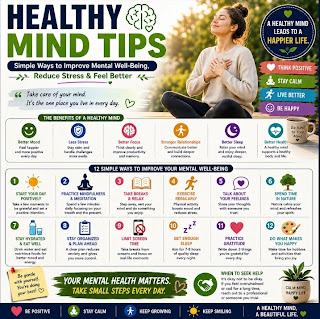


Healthy Mind Tips: Simple Ways to Improve Mental Well-Being, Reduce Stress & Feel Better
Healthy Mind Tips: Simple Ways to Improve Mental Health & Reduce Stress
Meta Description
Discover 20 simple healthy mind tips to support mental well-being, manage stress, improve sleep, stay positive, build healthy relationships and create a balanced daily routine.
Introduction
A healthy mind is an important part of overall health. Mental well-being is influenced by sleep, physical activity, nutrition, relationships, stress, daily routines and the environment around us. Mental and physical health are closely connected.
You don’t need to make major changes all at once. Small, consistent habits—such as getting enough sleep, moving regularly, spending time with supportive people and taking breaks from stressful information—can help support emotional well-being.
20 Healthy Mind Tips
1. Get Enough Quality Sleep
Sleep gives your body and mind time to recover. Keep a consistent bedtime and wake-up schedule whenever possible.
Adults generally need 7 or more hours of sleep per night.
2. Exercise Regularly
Walking, cycling, yoga, dancing, swimming and other physical activities can support mood, sleep and mental well-being.
3. Eat a Balanced Diet
Include:
- Fruits
- Vegetables
- Whole grains
- Beans and lentils
- Protein-rich foods
- Nuts and seeds
- Healthy fats
Good nutrition supports both physical and mental health.
4. Drink Enough Water
Staying adequately hydrated supports normal body functions and can be part of a healthy daily routine.
5. Practice Deep Breathing
When you feel tense, try slowly breathing in and out for several cycles.
Deep breathing, meditation and relaxation techniques are among the healthy ways recommended for managing stress.
6. Practice Meditation or Mindfulness
Spend a few quiet minutes focusing on your breathing, surroundings or present experience.
You don’t need a long session—start with 5 minutes and gradually increase if you enjoy it.
7. Spend Time With People You Trust
Healthy social connections can provide emotional support and help reduce feelings of isolation. Talking with trusted friends or family members can be helpful during stressful periods.
8. Take Breaks From Social Media
Constant exposure to negative news or stressful online content can increase feelings of stress. Consider setting specific times to check social media and taking regular breaks.
9. Spend Time Outdoors
Walking in a park, gardening or simply sitting outdoors can provide a relaxing break from screens and daily responsibilities.
10. Keep a Daily Routine
A simple routine can make your day feel more organized and predictable.
Include time for:
- Meals
- Work or study
- Exercise
- Relaxation
- Social connection
- Sleep
WHO recommends maintaining a daily routine as one practical approach to coping with stress.
11. Make Time for Hobbies
Reading, music, cooking, gardening, drawing, sports and other enjoyable activities can provide relaxation and a sense of accomplishment.
12. Practice Gratitude
Write down a few things you’re thankful for.
Gratitude is one strategy recommended by CDC for supporting emotional well-being and managing stress.
13. Set Realistic Goals
Break large tasks into smaller steps.
Instead of trying to finish everything at once, decide what needs to be done today and what can wait.
14. Learn to Say No
Taking on too many responsibilities can increase stress.
Set reasonable boundaries and avoid automatically accepting every request.
15. Be Kind to Yourself
Everyone makes mistakes and has difficult days.
Try to treat yourself with the same patience and understanding you would offer someone you care about.
16. Spend Less Time Sitting
Regular movement can benefit both physical and mental health. Even short periods of activity can be useful, especially if you normally spend much of the day sitting.
17. Avoid Using Unhealthy Coping Habits
Avoid relying on smoking, excessive alcohol or other substances to manage stress. These approaches can create additional health problems.
18. Learn Simple Stress-Management Skills
Useful options include:
- Deep breathing
- Meditation
- Yoga
- Walking
- Journaling
- Stretching
- Listening to music
- Talking with someone you trust
Different techniques work for different people.
19. Make Time to Relax
Schedule small periods during the day when you don’t have to be productive.
Read a book, listen to music, sit quietly, enjoy nature or practice another relaxing activity.
20. Ask for Help When You Need It
Taking care of your mental health doesn’t mean handling everything alone.
If stress, anxiety, sadness or other emotional difficulties are interfering with everyday life, consider speaking with a qualified healthcare or mental health professional.
Simple Daily Healthy Mind Routine
Morning
- Wake up at a consistent time.
- Drink water.
- Get some daylight.
- Eat a nutritious meal if you normally eat breakfast.
- Take a short walk or stretch.
Afternoon
- Take short breaks.
- Eat a balanced meal.
- Move your body.
- Limit unnecessary social-media or negative-news exposure.
- Connect with someone you trust.
Evening
- Do something enjoyable.
- Practice meditation or deep breathing.
- Write down something you’re grateful for.
- Prepare tomorrow’s priorities.
- Begin relaxing before bedtime.
Night
- Reduce screen use before sleep.
- Keep the bedroom comfortable.
- Follow a consistent sleep schedule.
- Aim for adequate sleep.
Premium Performance Track Jacket – Shop Now for Only $70.00 | Lightweight Athletic Quarter-Zip Pullover | Limited Time Offer
Symptoms of Poor Mental Well-Being
Mental health changes can appear differently from person to person. Possible signs that you may need additional support include:
- Persistent sadness
- Excessive worry
- Irritability
- Difficulty concentrating
- Loss of interest in activities
- Changes in sleep
- Changes in appetite
- Low motivation
- Feeling overwhelmed
- Difficulty managing everyday responsibilities
Stress can also cause problems such as difficulty concentrating, sleep problems, headaches, body pains and stomach problems.
These symptoms don’t necessarily indicate a specific mental health condition, but persistent or worsening symptoms deserve attention.
Common Causes of Mental Stress
Stress can be associated with:
- Work or study pressure
- Financial concerns
- Relationship difficulties
- Lack of sleep
- Major life changes
- Social isolation
- Excessive screen or news exposure
- Poor work-life balance
- Physical illness
- Lack of relaxation
- Too many responsibilities
Stress is a normal human response, but long-term stress can contribute to health
Healthy mental-wellness habits can help you:
- Manage everyday stress.
- Support better sleep.
- Improve mood.
- Improve concentration.
- Support emotional resilience.
- Encourage healthier relationships.
- Increase feelings of calm.
- Support physical health.
- Improve daily functioning.
- Build healthier coping skills.
Regular physical activity, for example, is associated with improved mental health and can reduce symptoms of anxiety and depression.
Prevention
To support long-term mental well-being:
- Maintain a regular sleep schedule.
- Stay physically active.
- Eat nutritious meals.
- Stay connected with supportive people.
- Take regular breaks.
- Limit excessive social-media and negative-news exposure.
- Practice relaxation techniques.
- Make time for hobbies.
- Avoid unhealthy coping behaviors.
- Seek professional support when problems persist.
Healthy Mind Tips for Busy People
If you have very little free time, start with 10-minute habits:
Morning: 5 minutes of breathing + 5 minutes of stretching
Lunch break: 10-minute walk
Evening: 10 minutes without your phone
Night: 5 minutes of relaxation + prepare for sleep
Small actions can be easier to maintain than trying to completely change your routine.
FAQ
What are healthy mind tips?
Healthy mind tips are simple habits that support emotional and psychological well-being, such as adequate sleep, physical activity, healthy eating, relaxation, social connection and stress management.
How can I keep my mind healthy every day?
Create a balanced routine with enough sleep, nutritious food, physical activity, relaxation and meaningful social connections.
Does exercise help mental health?
Yes. Regular physical activity can support mental well-being, improve sleep and reduce symptoms of anxiety and depression.
Can meditation improve mental well-being?
Meditation and mindfulness can be useful relaxation practices for some people and are commonly recommended as healthy ways to manage stress.
How much sleep is good for mental health?
Adults generally need 7 or more hours of sleep each night, although individual needs vary. A consistent sleep schedule can also support better sleep.
Can social media affect mental well-being?
Constant exposure to negative or stressful information can contribute to stress for some people. Taking regular breaks and setting limits may help.
What foods are good for mental wellness?
Focus on a varied, balanced diet containing vegetables, fruits, whole grains, legumes, protein-rich foods, nuts and seeds.
How can I reduce daily stress?
Try deep breathing, walking, exercise, meditation, journaling, hobbies, time outdoors and conversations with trusted people.
When should I seek professional help?
Consider professional support if sadness, anxiety, stress or other emotional difficulties persist, become worse or interfere with daily activities.
Is mental health connected to physical health?
Yes. Mental and physical health are closely connected, and caring for one can support the other.
Conclusion
A healthy mind is supported by small daily habits rather than perfection. Get enough sleep, eat nutritious food, stay active, manage stress, take breaks from stressful information, spend time with people you trust and make room for activities you enjoy.
If you’re struggling for an extended period or your emotional difficulties are affecting everyday life, seeking professional support is an important part of taking care of yourself.
Tags
Healthy Mind Tips, Mental Wellness, Mental Health Tips, Healthy Mind, Stress Management, Emotional Wellness, Mindfulness, Meditation, Healthy Lifestyle, Self Care, Well-Being, Mental Fitness, Healthy Habits
SEO Keywords
- healthy mind tips
- healthy mind tips for daily life
- mental health tips
- mental wellness tips
- how to keep your mind healthy
- healthy mind and body
- ways to improve mental health
- how to reduce stress naturally
- daily mental wellness habits
- emotional wellness tips
- healthy mental habits
- mindfulness tips
- stress management tips
- self care tips
- healthy lifestyle for mental health
Hashtags
#HealthyMind #HealthyMindTips #MentalHealth #MentalWellness #Mindfulness #StressManagement #EmotionalWellness #SelfCare #MentalHealthTips #HealthyLifestyle #WellBeing #HealthyHabits #Meditation #MindBodyHealth #HealthTips